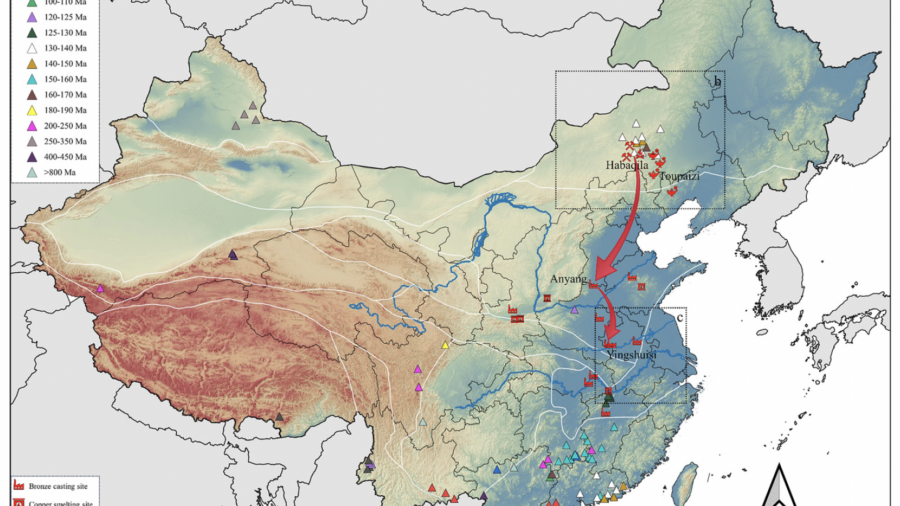
Archaeologists have identified a 1,500-kilometre supply network that provided tin to the Shang dynasty in Bronze Age China. A study published in the Proceedings of the National Academy of Sciences links mineral deposits in the Great Hinggan Range to bronze-making sites located far to the south.
Tracing the Mineral Origins
Researchers analyzed cassiterite grains found inside a bronze tripod discovered in northern China. By measuring uranium and lead isotopes within the crystals, scientists determined the minerals formed between 140 million and 132 million years ago. This dating matches geological data from the Great Hinggan Range in northeastern China.
Co-lead author Zhenfei Sun of Peking University stated that the findings allow for a detailed reconstruction of the ancient supply chain. The team compared these grains to ore samples from the Habaqila smelting site and slag from the Yingshuisi bronze-casting workshop. The data suggests these sites relied on the same northern source.
Logistical Challenges of Bronze Production
Tin was essential for the Shang dynasty, which ruled from approximately 1600 to 1046 BCE. Adding tin to copper creates bronze, a durable metal used for weapons and ritual vessels. Because tin deposits were rare, the dynasty required extensive trade networks to maintain production. Researchers compared the strategic importance of tin in the Bronze Age to the role of crude oil in modern economies.