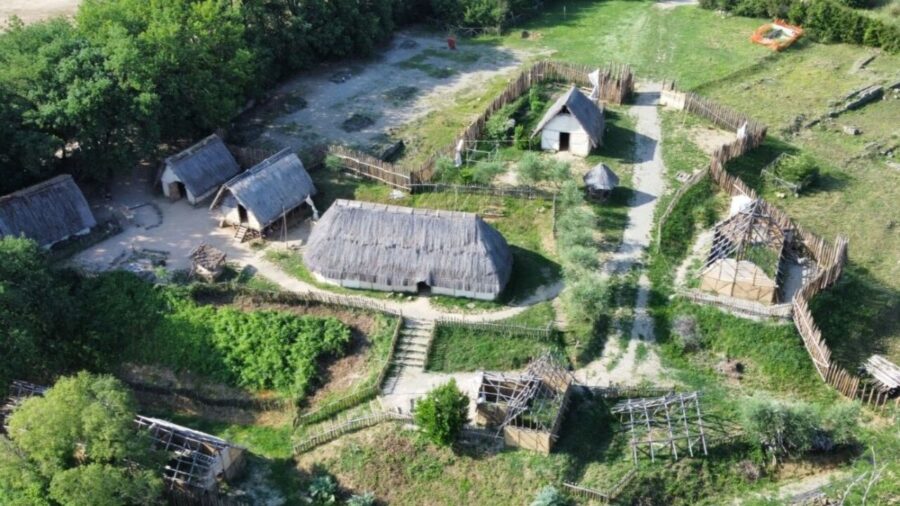
Archaeologists and performers have opened a full-scale replica of a medieval village in Poggibonsi, Italy, to demonstrate daily life during the reign of Charlemagne.
The living museum, inaugurated this week, features reconstructed timber houses, a forge, and a communal hall built according to archaeological findings from the 8th and 9th centuries. Actors trained in historical crafts portray farmers, blacksmiths, and merchants, offering visitors a hands‑on view of the period’s social and economic routines.
Organisers say the project aims to bridge academic research and public education by allowing observers to experience the spatial layout and material culture of a Carolingian settlement. Guided tours include demonstrations of period‑accurate farming techniques, textile production, and cooking methods using replica tools and ingredients.
Project background
The initiative is a collaboration between the University of Siena’s Department of Archaeology and the regional tourism board. Researchers used excavations from nearby sites and contemporary written sources to inform the reconstruction’s architecture and activity schedule.
Funding comes from a combination of EU cultural heritage grants and local municipality contributions. The site will operate seasonally, with school groups and tourists invited to participate in workshops and educational programs.
Future plans
Project leaders plan to expand the village to include a replica chapel and a market square, reflecting the broader urban network of the Carolingian Empire. They also intend to publish a detailed report on the reconstruction methodology for use by other heritage projects.
Why it matters: The Poggibonsi village offers a tangible illustration of early medieval life, helping scholars and the public alike understand the social structures that shaped the Middle East and Egypt during the same era, when trade routes linked Europe with the Islamic world.
 Egypt
 Saudi Arabia
 UAE
 Spain
 United Kingdom
 United States
 China
 India