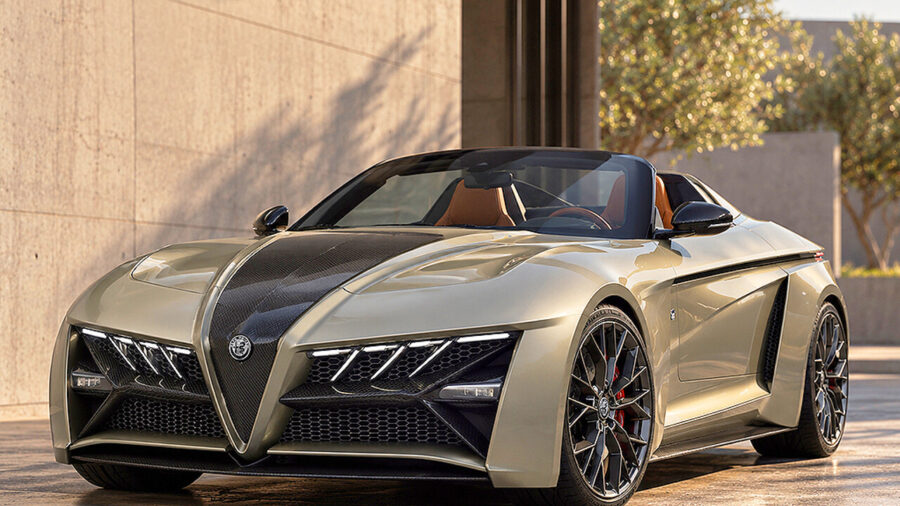
Italian design house Carrozzeria Castagna has introduced a new one-off vehicle built on the mechanical platform of an Alfa Romeo Giulia Quadrifoglio GTA. The custom project transforms the high-performance sedan into a two-seat spider-coupé.
The vehicle retains the 540-horsepower engine found in the production GTA model. Carrozzeria Castagna, a Milan-based coachbuilder, modified the bodywork to create the unique silhouette. The project represents a return to the company’s tradition of creating bespoke designs for established automotive platforms.
Design and Engineering Specifications
The modification process involved significant structural changes to the original Alfa Romeo architecture. The design team removed the rear seating area to accommodate the new two-seat configuration. The exterior features a revised roofline, transitioning the vehicle from a traditional sedan profile to a spider-coupé form factor.
- Base Model: Alfa Romeo Giulia Quadrifoglio GTA
- Engine Output: 540 horsepower
- Configuration: Two-seat spider-coupé
Historical Context of Coachbuilding
Coachbuilding involves the customization of existing automotive chassis, a practice that gained prominence in the early 20th century. Carrozzeria Castagna, founded in 1849, has a history of collaborating with luxury manufacturers to produce limited-run or single-unit vehicles. This project follows the company’s established practice of reinterpreting modern performance cars through handcrafted body panels and interior adjustments.
The company has not disclosed the owner of the vehicle or the total cost associated with the conversion process. This one-off model remains a private commission, highlighting the continued demand for personalization among automotive collectors.
Why it matters: This project demonstrates the enduring niche for traditional Italian coachbuilding in the modern era. It highlights how classic design techniques can be applied to contemporary high-performance engines, preserving the legacy of artisanal automotive customization.
 Egypt
 Saudi Arabia
 UAE
 Spain
 United Kingdom
 United States
 China
 India