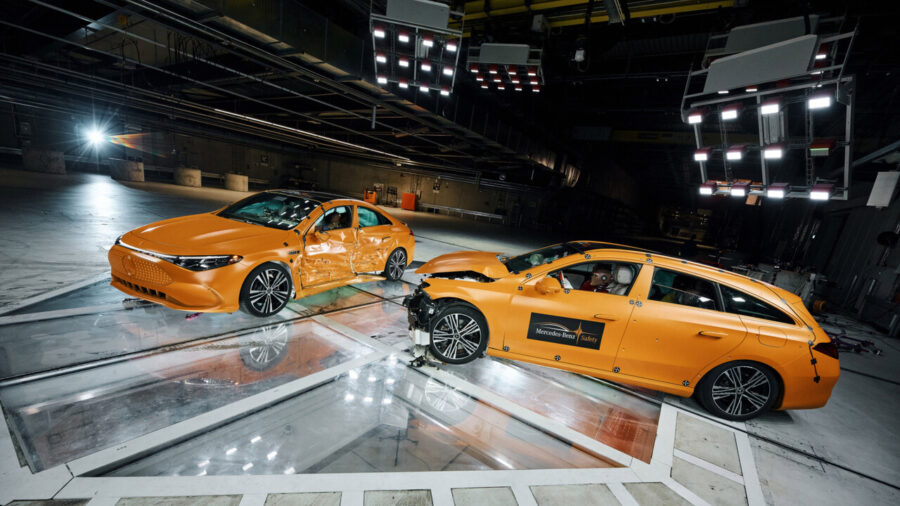
Mercedes-Benz has completed rigorous high-speed side-impact crash testing on its latest CLA model. The evaluation confirmed the structural integrity of the vehicle’s battery pack and the level of protection provided to occupants during a collision.
Key Safety Findings
- Battery integrity: The high-voltage battery system remained intact and functional following the high-speed lateral impact.
- Occupant protection: Test data indicated the cabin structure effectively shielded passengers from critical injury.
- Structural durability: The vehicle frame absorbed the force of the collision as designed, limiting cabin deformation.
- Standard testing: The trial was conducted under strict safety protocols to ensure compliance with global crash safety standards.
Vehicle Safety Performance
The testing focused on the specific risks associated with lateral collisions, which often present significant challenges for electric vehicle architectures. Engineers monitored how the chassis managed kinetic energy during the high-speed event. The results showed that the safety cell surrounding the passengers maintained its shape, preventing intrusion into the interior space.
Furthermore, the battery pack, a critical component in the CLA’s electric configuration, showed no signs of failure or hazardous leakage. The successful outcome of these tests demonstrates the effectiveness of the current safety engineering strategies employed by Mercedes-Benz for its upcoming vehicle lineup.
Why it matters: As the automotive industry shifts toward electrification, ensuring battery safety during severe accidents is critical for consumer adoption and regulatory approval. These results provide empirical data on how modern electric vehicle platforms perform under extreme physical stress, which is essential for safety certification processes in international markets.
 Egypt
 Saudi Arabia
 UAE
 Spain
 United Kingdom
 United States
 China
 India