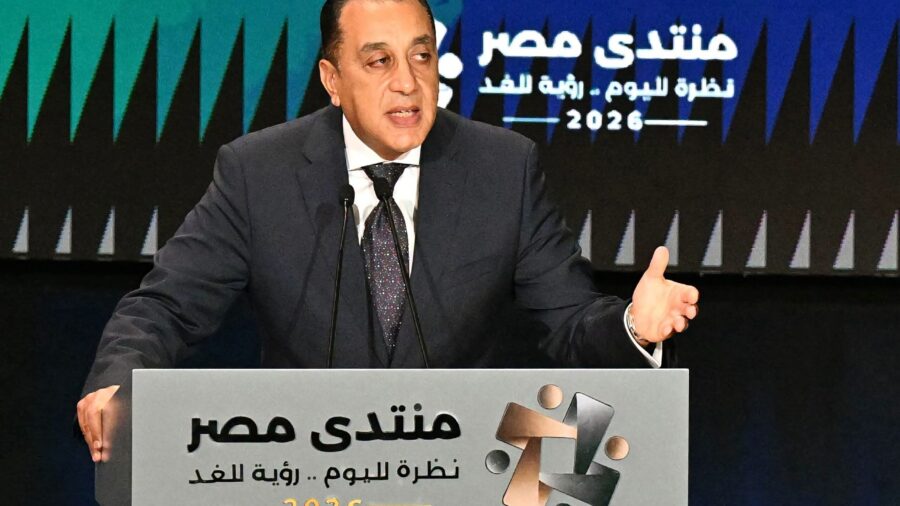
Prime Minister Mostafa Madbouly announced a series of economic development targets during the Egypt Forum 2026, outlining the government’s strategy for the coming years. The initiatives focus on expanding agricultural production, increasing industrial output, and upgrading national infrastructure.
The 2027–2030 Economic Transformation Programme
The government is preparing to launch the National Economic Transformation Programme, which aims to achieve 6.8% economic growth by the end of fiscal year 2029/30. The program sets targets of 7% inflation and a 5.5% unemployment rate. It includes 185 measures across agriculture, manufacturing, ICT, tourism, and energy sectors.
Agricultural and Food Security Goals
Egypt intends to expand its total cultivated area to 12.5 million feddans, building on an increase from 9.1 million to 10.5 million feddans. The strategy includes a 2.2 million-feddan land reclamation project with EGP 100 billion in investment. Officials aim to raise wheat self-sufficiency to over 60% and increase grain storage capacity to more than 6 million tonnes within two years.
Manufacturing and Energy Targets
The government plans to increase annual domestic car production to over 100,000 vehicles, with a goal of 60% local content. To support broader industrial growth, Egypt has established 16 industrial complexes housing roughly 4,800 factories. In the energy sector, officials target a 45% share of renewables in the electricity mix by the end of 2028. Additionally, the country is constructing a 2,250-kilometre high-speed electric rail network.
Current Status of Development
The government is currently advancing infrastructure projects, including desalination plans to reach 10 million cubic metres per day. The Suez Canal Economic Zone has secured over $10 billion in investment to date. These measures are designed to increase export capacity and domestic production levels.
Why it matters: These targets represent a significant shift toward domestic production and food security. By expanding agricultural land and incentivizing local manufacturing, Egypt aims to reduce its reliance on external supply chains and stabilize its economy against global market shocks.
 Egypt
 Saudi Arabia
 UAE
 Spain
 United Kingdom
 United States
 China
 India
