Addressing National Challenges
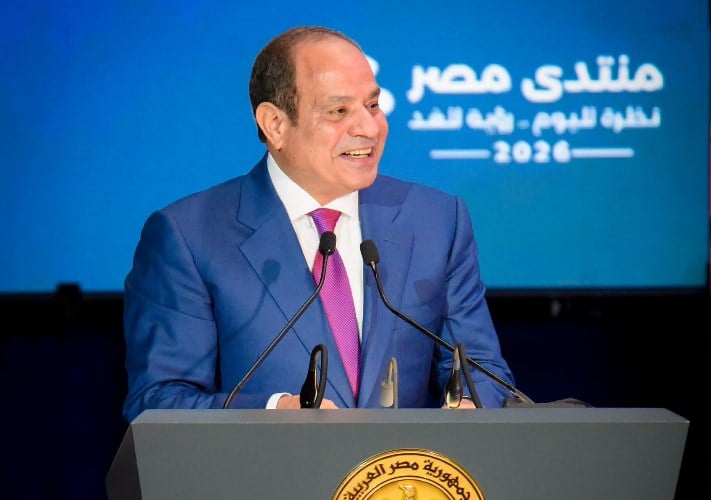
President Abdel Fattah Al-Sisi told an audience at the closing ceremony of the Egypt Forum 2026 on Saturday that his administration chose the “hardest and most lasting path” to resolve the country’s longstanding systemic issues. Speaking to attendees, the president acknowledged the significant economic pressure placed on citizens since he assumed office in 2014.
When he took power, Al-Sisi stated, the country faced urgent security threats, failing infrastructure, and deteriorating public services. He said the government faced a binary choice: manage immediate crises or address the roots of structural economic and administrative problems. The government opted for comprehensive reform within accelerated timelines to prevent these issues from affecting future generations.
“The great Egyptian people endured the burdens of this phase with patience and resilience,” Al-Sisi said. He described the public as the true support for the state during those testing periods.
New Annual Policy Forum
Addressing the relationship between the state and the public, Al-Sisi stated that government institutions exist to serve citizens and protect their interests. He warned that portraying state institutions as being in conflict with the public could undermine national cohesion. To improve communication, he announced that the Egypt Forum will now be held annually, with each gathering focusing on a specific sector to assess progress.
The president stated that the forum will serve as a platform for open dialogue between the government and society. He directed state institutions to coordinate on implementing recommendations from the forum, specifically those aimed at reducing cost-of-living pressures. Decisions made during these sessions will be published online, with the Presidency monitoring their implementation.
Why it matters: This announcement signals a push by the Egyptian government to institutionalize public feedback mechanisms following a decade of difficult economic reforms. The move aims to address domestic concerns regarding the cost of living while attempting to bridge the gap between state policy and public perception.
 Egypt
 Saudi Arabia
 UAE
 Spain
 United Kingdom
 United States
 China
 India
