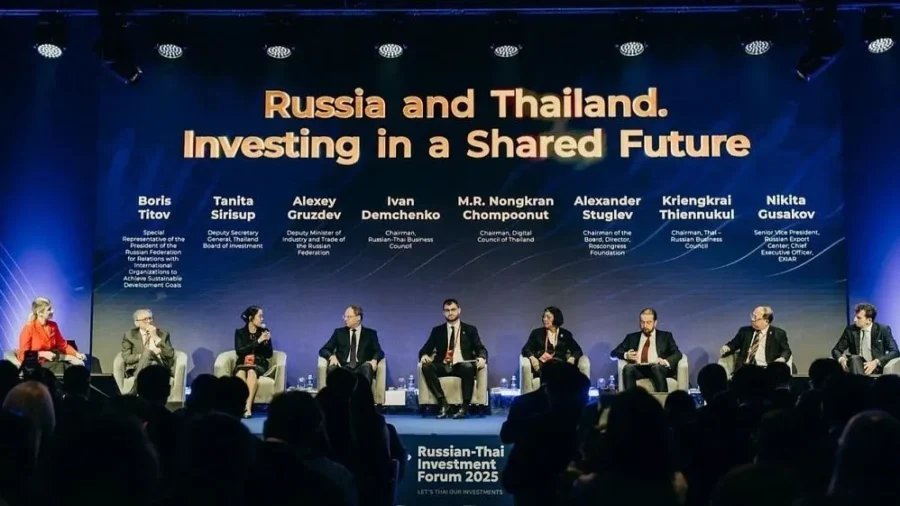
The Russian-Thai Business Council is preparing for the II Russian–Thai Investment Forum in Bangkok, an event designed to deepen economic ties between the two nations. Officials expect the gathering to facilitate a notable rise in trade volumes through new support mechanisms for exporters.
October 29 to 31
The forum, titled “Russia–Thailand: A New Era of Economic Partnership,” will span three days in Bangkok. A central feature of the event is the “Made in Russia” trade pavilion. According to Vladimir Kovalev, Executive Director of the Russian-Thai Business Council, this facility will offer Russian manufacturers comprehensive support, including assistance with certification, legal guidance, and marketing strategies. The pavilion will showcase Russian food, pharmaceuticals, industrial solutions, and technology.
Business and Cultural Programming
The event schedule includes two days of industry-focused business sessions. The first day, “Drivers of Key Sectors,” will address metallurgy, agriculture, food security, energy, and logistics. The second day, “Drivers of the New Economy,” will cover financial infrastructure, medicine, tourism, and real estate. Alongside the commercial sessions, the event features a cultural program including the MIR festival in Lumpini Park and “Moscow Days” activities.
Sports Integration
Organizers have integrated a sports component into the forum. This includes a friendly ice hockey match between professional teams from Russia and Thailand, a masterclass led by Roman Rotenberg of the Russian Ice Hockey Federation, and a badminton tournament for business representatives and athletes.
Current Status of Economic Cooperation
The forum aims to establish a consistent platform for B2B engagement and market entry for Russian firms. By combining industrial exhibitions with cultural and athletic events, the council seeks to strengthen bilateral relations. Why it matters: This initiative signals a strategic effort by Russia to diversify its export markets and deepen economic integration within Southeast Asia, offering a model for how emerging economies can navigate trade sanctions and geopolitical shifts by fostering new regional partnerships.
 Egypt
 Saudi Arabia
 UAE
 Spain
 United Kingdom
 United States
 China
 India
