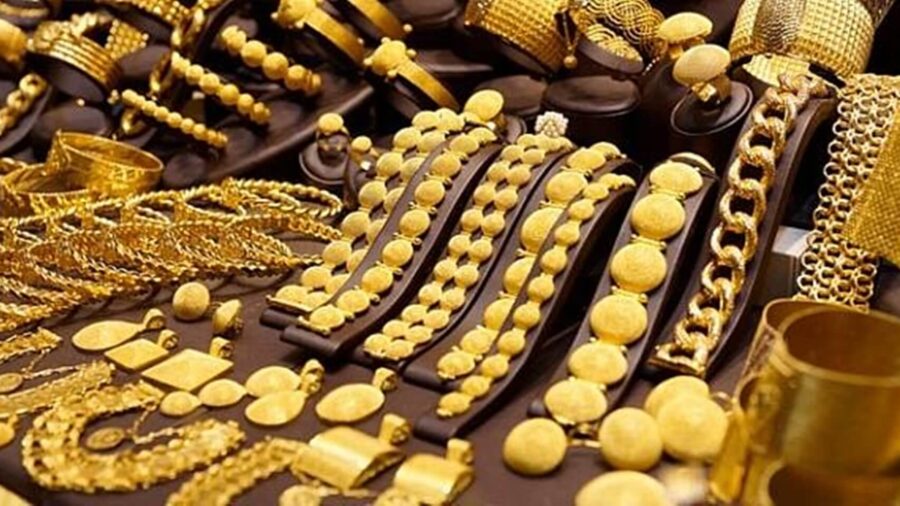
Domestic gold prices in Egypt increased last week, bucking a global downward trend as a weakening local currency bolstered the precious metal’s value. The price of 21-karat gold, the most commonly traded variety in the country, rose by 0.5% to reach EGP 6,280 per gram by the close of trading, up from EGP 6,250 at the start of the week.
Market Divergence
The increase occurred despite a 4.1% drop in international gold prices, which finished the week at $3,995 per ounce after opening at $4,167. The Gold and Precious Metals Division of the Egyptian Federation of Industries stated that the rise in the U.S. dollar exchange rate against the Egyptian pound effectively countered the impact of falling global gold values.
Ehab Wassef, head of the division, noted that the dollar exchange rate climbed by approximately 3.2% last week, gaining EGP 1.7 to surpass EGP 55. This official bank rate reached a record high, which supported local gold costs. Wassef explained that 21-karat gold prices briefly approached the EGP 6,300 resistance level but failed to maintain that momentum, ultimately retreating as the market sought a new trend.
Economic Factors
The currency pressure stems from several broader economic developments. Crude oil prices rose to over $117 per barrel, a five-month high, increasing energy import costs. Additionally, geopolitical tensions in the Middle East have elevated shipping expenses, further straining the import bill.
Data from the Gold and Precious Metals Division indicated that investment outflows from Egypt’s debt markets totaled approximately $1.83 billion over four days. This capital flight increased demand for foreign currency, exerting further pressure on the Egyptian pound and influencing local gold pricing mechanisms.
Why it matters: The divergence between local and global gold prices highlights the sensitivity of the Egyptian market to currency fluctuations. As the Egyptian pound faces pressure from rising import costs and capital outflows, gold remains a primary hedge for local investors against currency devaluation, even when international market trends suggest otherwise.
 Egypt
 Saudi Arabia
 UAE
 Spain
 United Kingdom
 United States
 China
 India
