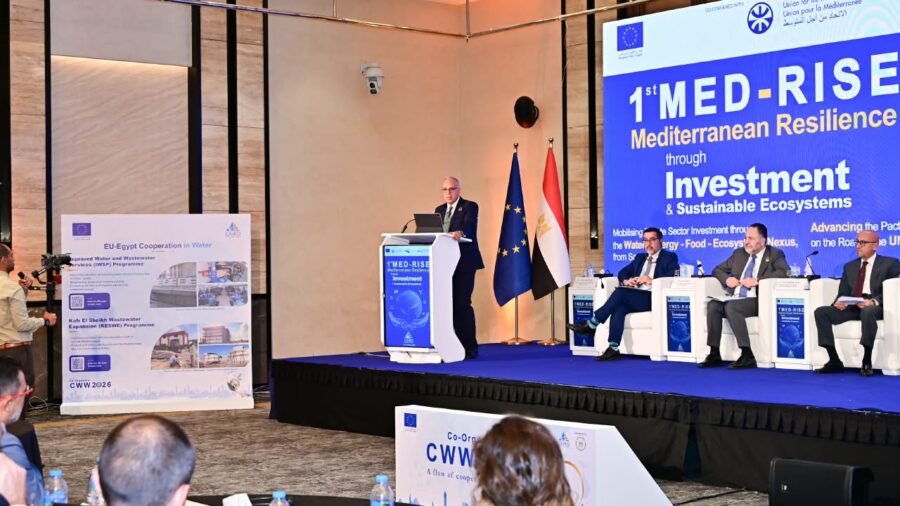
Egypt has been elected to chair the executive bureau of the Arab Ministerial Water Council for the current term. Sudan was selected to serve as the deputy chair. The announcement occurred during the ninth Cairo Water Week, where Egyptian Water Resources and Irrigation Minister Hani Sewilam participated in several regional meetings.
The executive bureau, which includes representatives from Jordan, Saudi Arabia, Iraq, Bahrain, Djibouti, Algeria, Sudan, and Egypt, oversees the implementation of council decisions. It also coordinates regional positions on water policy for international forums. During his remarks, Minister Sewilam inaugurated the seventh Arab Water Conference, themed “Water in the Arab Region: Partnerships for Peace and Sustainable Development,” which brought together various regional officials.
Regional Water Cooperation and Strategy
Minister Sewilam advocated for tangible cooperation on water management, including desalination, rainwater harvesting, and wastewater treatment. He noted that Arab nations must translate these collaborative goals into projects capable of securing financing. According to the minister, essential strategies for improving water efficiency include technology transfer, capacity building, and innovative investment mechanisms.
The minister also emphasized the importance of water diplomacy regarding shared resources. He stated that cooperation must align with international law and the principle of avoiding harm. Furthermore, he called for improved data exchange and the development of early-warning systems. These efforts aim to align Arab priorities ahead of the 2026 UN Water Conference in Abu Dhabi and the 2027 World Water Forum in Riyadh.
Private Investment and Climate Risks
At the MED-RISE conference, Sewilam addressed the funding gap in the water sector. He reported that developing nations spend approximately $165 billion annually on water, with public budgets covering over 90% of costs, while private finance contributes less than 2%. He urged a shift toward blended finance models to increase private-sector participation.
 Egypt
 Saudi Arabia
 UAE
 Spain
 United Kingdom
 United States
 China
 India
