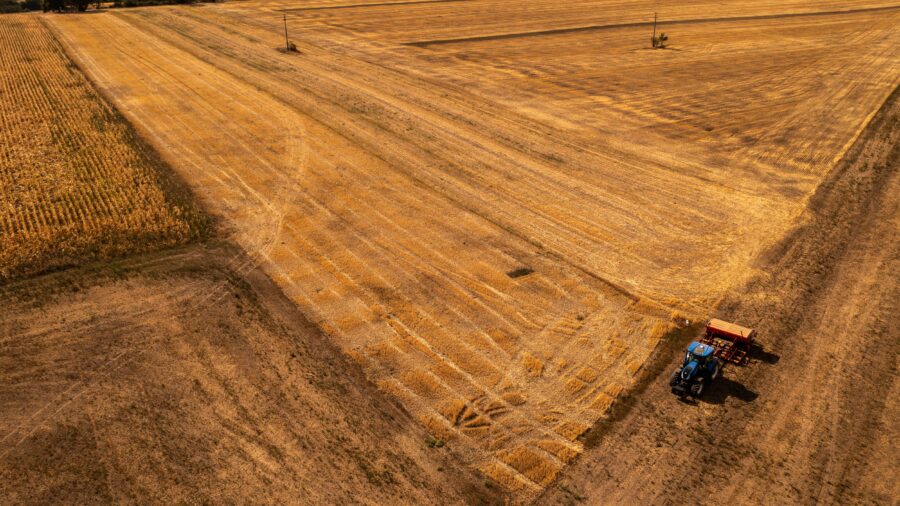
Standing in a withered cornfield in northwestern Romania, farmer Dan Corbut inspects the remnants of a failed crop. For Corbut, who operates 3,500 hectares in Bihor province, the current conditions are unprecedented in his three decades of farming.
A Record-Breaking Dry Spell
Corbut describes the season as a catastrophe. He reports that rainfall between August 2024 and August 2025 totaled approximately 250 liters per square meter. This is less than half of the typical average of 500 to 600 liters per square meter observed in recent years in the eastern part of the country.
The lack of water has severely impacted the output of his company, Agroind Cauaceu. Corbut states that corn yields have been negligible this year, forcing a reevaluation of agricultural sustainability in the region. The area, often referred to as a breadbasket for the continent, is facing significant pressure as climate patterns shift.
Broader Agricultural Implications
The situation in Romania reflects broader concerns regarding food security and agricultural resilience in Europe. Farmers are increasingly reporting that historical weather data is becoming less reliable for planning planting and harvesting cycles.
As the agricultural sector processes these losses, attention is turning toward long-term adaptation strategies. Experts suggest that without significant changes to irrigation infrastructure and crop management, regions dependent on consistent rainfall will face continued volatility in production levels.
Why it matters: Romania is a major grain producer for the European market. Significant crop failures here can disrupt supply chains and increase food prices, affecting import-dependent nations, including those in the Middle East and Egypt that rely on steady grain exports from the Black Sea region.
 Egypt
 Saudi Arabia
 UAE
 Spain
 United Kingdom
 United States
 China
 India
