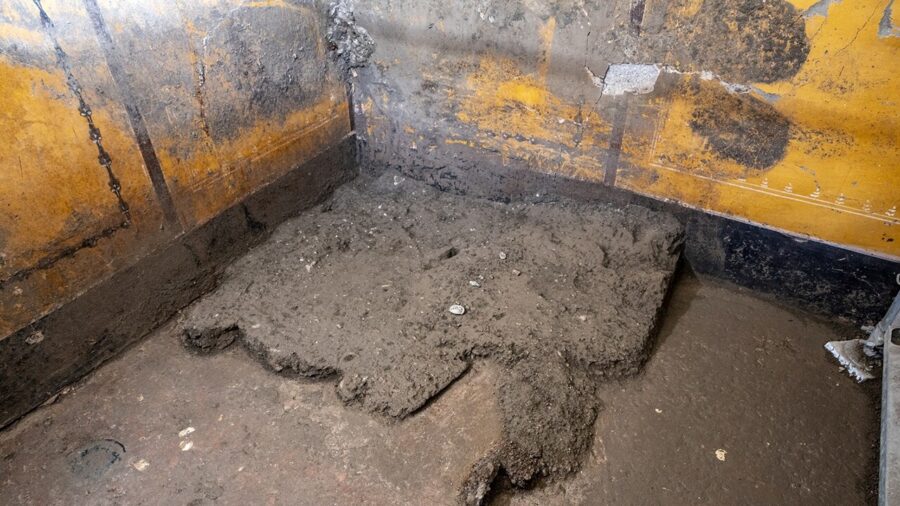
Archaeologists at the Pompeii archaeological park have discovered an intact wooden cabinet containing household objects belonging to a woman. The find provides new insight into the daily life and material culture of the Roman city before its destruction by the eruption of Mount Vesuvius in 79 AD.
The cabinet, unearthed during recent excavations, contained a variety of items, including ceramic vases, necklaces, and coins. Experts say the preservation of these objects offers a detailed look at the habits, occupations, and personal belongings of the cabinet’s owner.
Insights into Ancient Domestic Life
Gabriel Zuchtriegel, the director of the Pompeii Archaeological Park, stated that the discovery allows researchers to reconstruct the daily routines and personal histories of those living in the city. The presence of both utilitarian items like vases and personal accessories such as jewelry indicates a mix of household management and personal expression.
The site of Pompeii continues to yield significant archaeological data. Ongoing preservation efforts focus on documenting these artifacts in their original context to better understand the social and economic structure of the Roman population.
Preservation and Future Analysis
Researchers plan to perform further analysis on the coins and jewelry to determine their origin and potential value. The cabinet itself is being stabilized for conservation. The findings will be cataloged and eventually prepared for public display, contributing to the broader understanding of Roman domesticity.
Why it matters: This discovery provides rare, tangible evidence of individual life in an ancient society. For historians and the public, these findings help humanize the victims of the Vesuvius eruption by revealing the specific tools and personal mementos that defined their daily existence.
 Egypt
 Saudi Arabia
 UAE
 Spain
 United Kingdom
 United States
 China
 India
