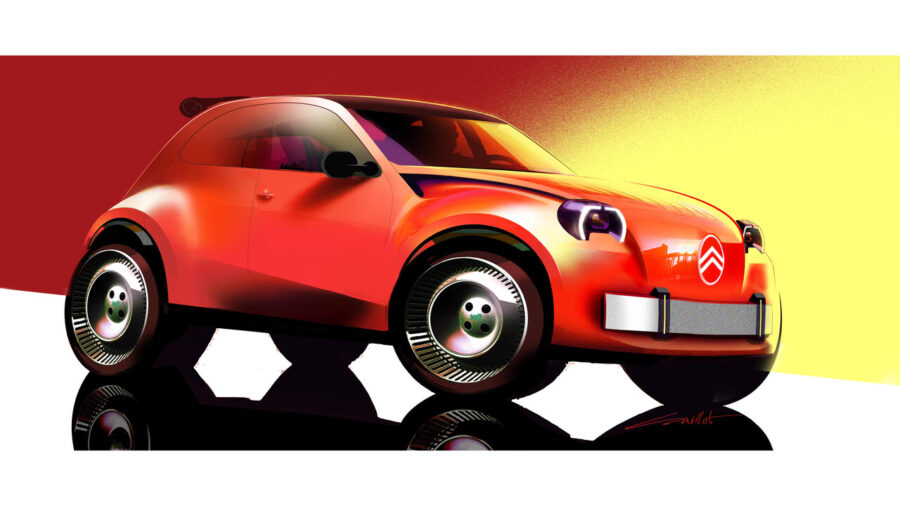
Citroën has released a series of design sketches for a modern interpretation of its historic 2CV small car. The automaker presented the concept in Paris, offering a look at how the company might modernize the aesthetic of the vehicle, which was originally produced between 1948 and 1990.
Revisiting a Classic Design
The sketches highlight the brand’s approach to updating the 2CV, a model known for its minimalist engineering and utilitarian purpose. While the company has not confirmed plans for mass production, the presentation focused on the design evolution of the historic model. The images reveal how Citroën designers are attempting to blend the vehicle’s classic silhouette with contemporary automotive standards.
The 2CV remains one of the most recognizable vehicles in automotive history. Its original design was intended to provide affordable transport for the French rural population, featuring a simple chassis and an air-cooled engine. The new conceptual sketches maintain the rounded roofline and pronounced wheel arches that defined the original model, though updated with modern lighting and panel integration.
Automotive Heritage and Future Strategy
Citroën has frequently utilized its historical catalog to inform its current design language. Reinterpreting iconic models allows manufacturers to test consumer interest in heritage-inspired designs while showcasing advancements in manufacturing techniques. The release of these sketches serves as an exercise in industrial design, emphasizing the brand’s connection to its past while signaling potential future stylistic directions.
The automaker has not provided a timeline for a potential production version or further technical specifications regarding the concept’s powertrain. For now, the sketches remain a conceptual study intended to demonstrate the versatility of the brand’s design team.
 Egypt
 Saudi Arabia
 UAE
 Spain
 United Kingdom
 United States
 China
 India
