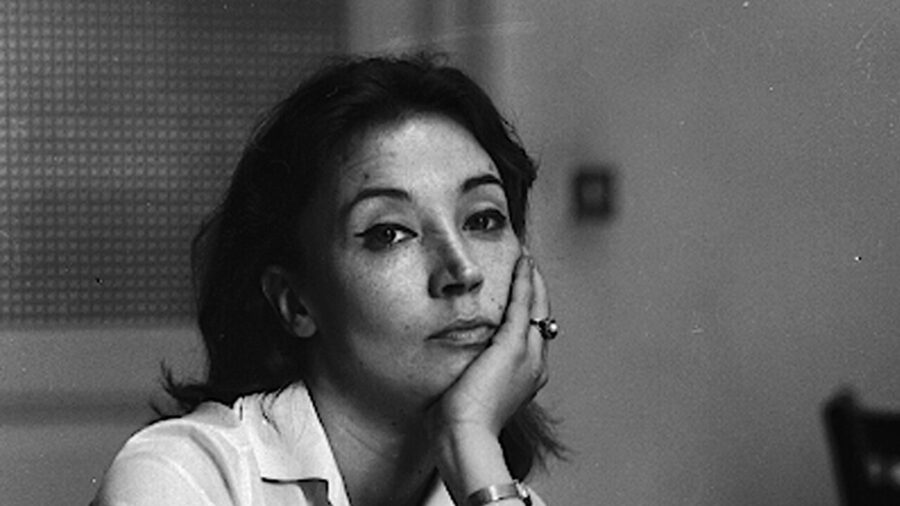
Italian political scientist Domenico Fisichella has stated that the late journalist and author Oriana Fallaci would advocate for a stronger focus on identity and culture if she were alive today. Speaking on the enduring influence of the writer, Fisichella emphasized the role her work played in shaping the perspectives of countless women.
The Impact of Fallaci’s Writing
Fisichella noted that Fallaci, through her extensive body of work, provided generations of women with significant strength and intellectual fortitude. Her writing, often characterized by its directness and confrontational style, remains a subject of discussion within Italian cultural and political circles.
According to Fisichella, Fallaci’s perspective on contemporary issues would likely center on the necessity of maintaining cultural integrity. He suggested that her critical approach to society would highlight gaps in how modern nations address their foundational values and collective identity.
Context of Her Legacy
Oriana Fallaci was an Italian journalist, author, and political interviewer known for her coverage of major international conflicts and her interviews with global leaders. Her career spanned several decades, during which she became a polarizing figure for her candid critiques of politics, religion, and social movements. Since her death in 2006, her books continue to be widely read and debated, frequently cited by commentators discussing the intersection of journalism and political philosophy.
Why it matters: The discussion surrounding Fallaci’s legacy highlights ongoing debates about cultural preservation and identity politics in the West. For readers in the Middle East and Egypt, where Fallaci’s work often touched upon sensitive geopolitical and religious themes, her enduring influence serves as a reminder of the power of media narratives in shaping cross-cultural perceptions and political discourse.
 Egypt
 Saudi Arabia
 UAE
 Spain
 United Kingdom
 United States
 China
 India
