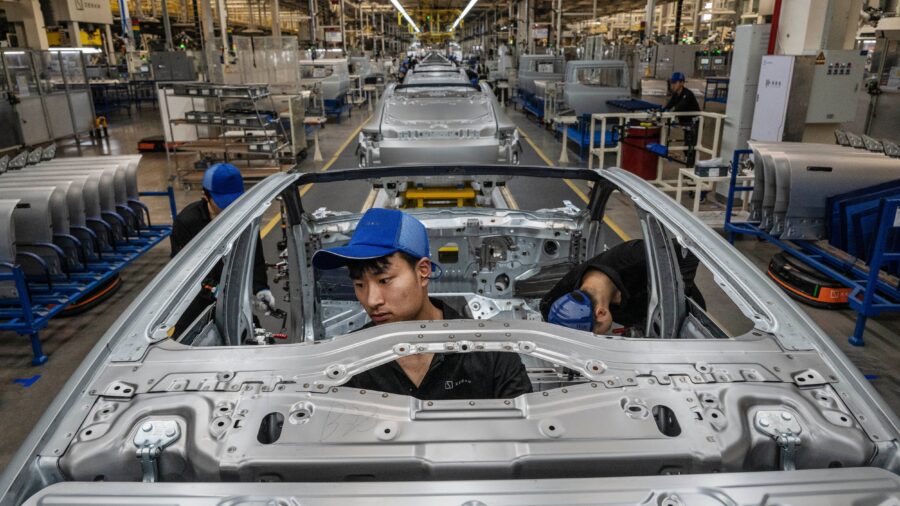
Geely Automobile reported a 28% increase in profits for the third quarter, yet the company’s stock valuation remains subdued. Despite solid financial performance and a strong market position in China, shares have declined 24% this year, reflecting investor caution regarding the automaker.
Key Financial and Strategic Insights
- Earnings growth: The company posted a 28% profit increase during the July-September period.
- Market valuation: Geely’s stock currently trades at five times forecast earnings, significantly lower than the average of 13 for its Chinese peer group.
- Electric transition: Electric vehicles now account for 60% of the company’s total sales for the year.
- Competitive standing: The firm ranks as the second-largest automaker in China, trailing only BYD.
- Technological advancement: In August, Geely introduced a battery charging system described as the fastest in the industry.
Market Disconnect
The discrepancy between Geely’s operational success and its stock price persists. While the company maintains a robust position, selling a high volume of both internal combustion and electric vehicles, financial markets continue to value the firm at approximately 18 billion euros. This valuation is notably lower than the average of eight comparable Chinese manufacturers.
Li Shufu, the founder of Geely, has overseen a shift in the company’s portfolio toward electrification without abandoning traditional combustion engine sales. The company remains one of the top three sellers of internal combustion vehicles, balancing legacy production with new energy vehicle growth.
Why it matters: This trend highlights a broader investor skepticism toward Chinese automakers, even those successfully managing the transition to electric mobility. For global markets, Geely’s struggle to gain valuation parity with its peers serves as a case study in how established manufacturers face challenges in convincing shareholders of their long-term growth potential in an increasingly competitive EV landscape.
 Egypt
 Saudi Arabia
 UAE
 Spain
 United Kingdom
 United States
 China
 India
