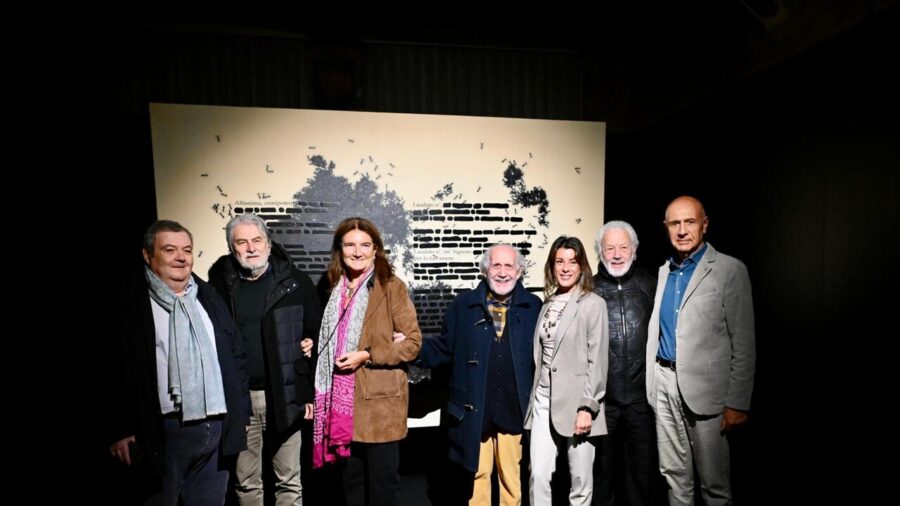
In a modest courtyard of Perugia’s maximum-security prison, artist Emilio Isgrò spoke to a small group of female detainees on Tuesday, reminding them that “the time spent in prison is not to be erased.” The meeting was part of the “Il Museo in valigia” project, which brings portable museum experiences to unconventional venues.
Isgrò, known for his erasure art, arrived accompanied by cultural mediators and prison officials. He began by showing reproductions of his works, explaining how he removes portions of texts and images to create new meanings. “Art can help you see the layers of your own story,” he told the inmates, who listened attentively.
The dialogue continued with questions from the women about the role of memory and identity while serving sentences. Several participants expressed that the encounter offered a rare chance to reflect beyond the prison walls. One inmate, who asked to remain anonymous, said the conversation helped her consider how she might document her own experiences after release.
Prison director Marco Bianchi said the initiative aligns with the facility’s educational and rehabilitative goals. “We aim to provide cultural programs that stimulate critical thinking and personal growth,” Bianchi said in a statement.
Organizers of “Il Museo in valigia” view the project as a way to democratize access to art. The traveling exhibition, which includes portable displays of Isgrò’s erasures, has visited schools, community centers, and now correctional facilities across Italy.
Human rights advocates have praised the program for offering inmates constructive engagement. “Cultural activities can reduce recidivism by fostering self‑esteem and social skills,” noted Sara El-Masri of the Italian Prison Reform Association.
Authorities plan to expand the project to other prisons later this year, with a focus on integrating more interactive workshops. The next scheduled visit will be at a facility in Sicily, where Isgrò will lead a collaborative art session.
 Egypt
 Saudi Arabia
 UAE
 Spain
 United Kingdom
 United States
 China
 India
