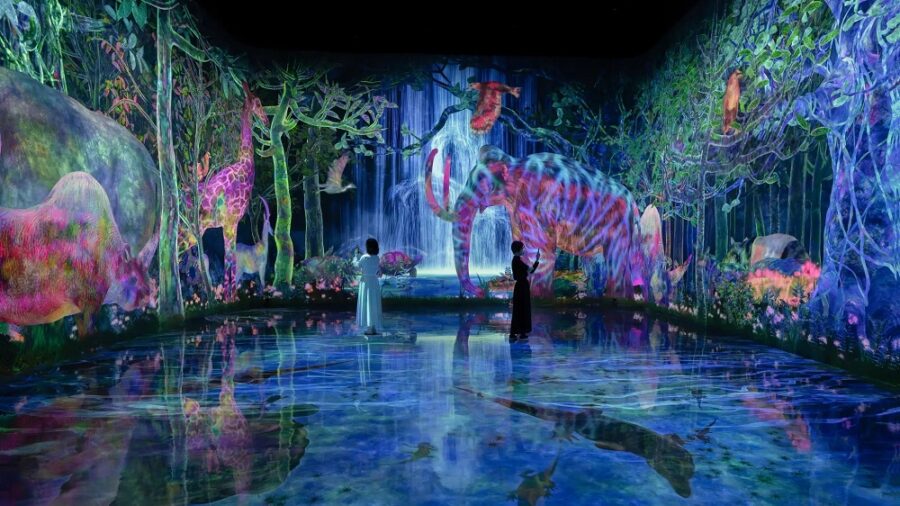
Japanese digital art collective TeamLab will open its first permanent museum in the United States, located within the OCVIBE development in Anaheim, California. The group, known for immersive, technology-driven exhibits, announced the project as part of an expansion into the American market.
Project Details and Timeline
The facility, tentatively titled TeamLab Museum Anaheim, will span approximately 10,000 square meters, or 110,000 square feet. It will be integrated into the OCVIBE complex, a multi-use development project currently under construction near Disneyland that includes office space, hotels, apartments, and green spaces.
TeamLab co-founder Toshiyuki Inoko stated the organization aims to explore concepts of consciousness and existence through its installations. The exhibits are designed to react to the presence of visitors, incorporating the audience into the artwork itself.
While initial phases of the OCVIBE complex, including an amphitheater and restaurants, are scheduled to open as early as next spring, the TeamLab facility is not projected to open until 2030. This timeline is two years ahead of the group’s planned new museum in Tokyo.
Background on TeamLab
TeamLab has gained international recognition for digital installations that frequently appear on travel lists for visitors to Japan. Their existing museums, such as TeamLab Borderless and TeamLab Planets, utilize light and interactive technology to create environments without traditional boundaries. The group emphasizes that their work changes based on visitor interaction, aiming to connect individuals to the installation and the surrounding environment.
Why it matters: The expansion represents a significant shift for the art collective as it moves from its established base in Japan to a major U.S. entertainment hub. For international observers and the global art community, the move highlights the growing demand for interactive, technology-based cultural experiences in large-scale entertainment developments, demonstrating how traditional tourism destinations are diversifying their offerings to include digital art as a primary attraction.
 Egypt
 Saudi Arabia
 UAE
 Spain
 United Kingdom
 United States
 China
 India
