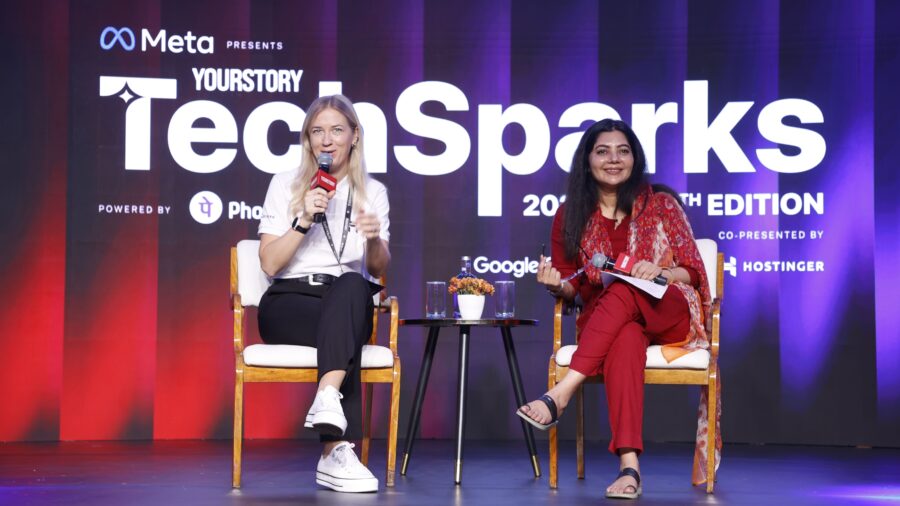
In a bustling hall at TechSparks 2026 in Bengaluru, Auksė Žaigulė, Vice President of Product at Hostinger, described how a founder in Srinagar launched a website and app in minutes using the platform.
From Building to Running a Business
Žaigulė said early customers asked how to publish a site, a task that once required technical skill. “Now AI has removed much of that barrier,” she told YourStory founder Shradha Sharma. Today founders ask how to attract clients, generate revenue and manage operations.
She noted that many new entrepreneurs juggle multiple services—domains, email, marketing—across different providers, ending up with several subscriptions and logins. When a problem arises, the founder often becomes a technician. Hostinger aims to consolidate the workflow and embed AI agents to handle integration points.
Where the Advantage Lies
According to Žaigulė, once code is abundant, competitive edge moves to understanding the customer. She cited Apple’s iPhone as an example of delivering superior experience rather than inventing new hardware. Drawing on the book *Monetizing Innovation*, she warned that a great product does not automatically translate into a great business; market strategy must be considered early.
Žaigulė emphasized “customer obsession” as unchanged despite AI proliferation. She described it as genuine dialogue, not automated surveys. Sharma added a field lesson from the Bharat Project: outreach in Bihar and Uttar Pradesh expected email replies, but many users engaged via Facebook, underscoring the need to meet customers where they are.
When asked who makes final decisions as AI agents take on more tasks, Žaigulė replied that the founder retains the last word. Trust, she said, must be earned; she recounted a Hostinger agent confirming a conference by email, only for the CEO to learn of the commitment later, highlighting the limits of automated coordination.