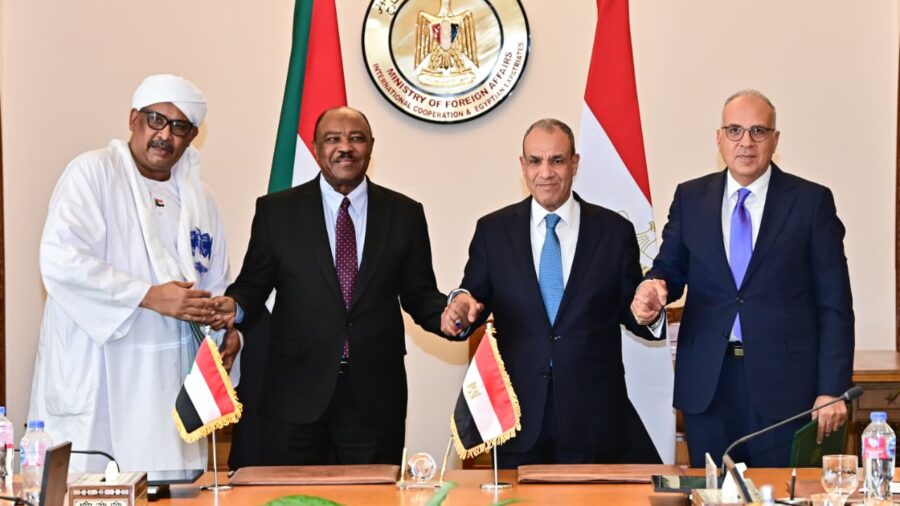
Egypt and Sudan have formally rejected unilateral management of the Grand Ethiopian Renaissance Dam, citing persistent threats to their water security. Foreign and irrigation ministers from both nations issued a joint statement Monday in Cairo following the third round of their “2+2” consultation mechanism.
Key Takeaways
- Water security concerns: Egypt and Sudan declared their water security “indivisible” and reaffirmed their rights under the 1959 Nile Waters Agreement.
- Opposition to unilateralism: Both nations demanded that Ethiopia abandon unilateral policies regarding the Blue Nile and resume cooperation based on international law.
- Dispute scope: The countries stated the dam dispute involves only the three Eastern Nile Basin nations and rejected efforts to involve other regional actors.
- Support for institutions: Egypt pledged continued support for Sudan’s sovereignty and state institutions, rejecting the legitimacy of parallel governing entities.
- Infrastructure security: Officials condemned recent drone attacks by rebel militias on Sudanese electricity and water infrastructure.
Stance on the Nile Basin
The joint statement emphasized that Ethiopia’s management of the dam without a binding legal framework remains a primary concern for downstream nations. Egyptian Foreign Minister Badr Abdelatty and Irrigation Minister Hani Sewilam met with Sudanese Foreign Minister Mohi El-Din Salem and Agriculture Minister Ismat Qurashi to coordinate positions. The ministers called for adherence to international principles, including prior notification, consultation, and the avoidance of significant harm.
Both countries reaffirmed the role of the Permanent Joint Technical Commission for Nile Waters in establishing common positions. While maintaining a hard line on the dam, the nations expressed support for development projects in the southern Nile Basin, provided those projects meet technical standards and follow established protocols for consultation and agreement.