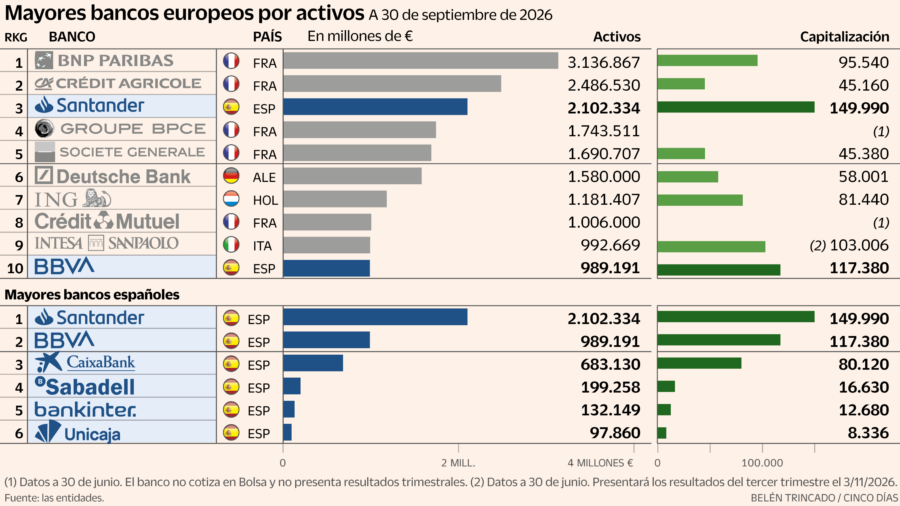
In a modest conference room in Madrid, senior executives of Banco Santander signed the final documents that sealed the purchase of U.S. lender Webster, concluding a deal that had been under negotiation for months. The acquisition, completed in August, pushed the Spanish bank’s total assets to €2.1 trillion, according to its third‑quarter report released on Tuesday.
Deal lifts Santander past €2 trillion mark
The bank reported assets of €1.9 trillion at the end of June, up from €1.8 trillion at the start of the year. The addition of Webster’s balance sheet added roughly €200 billion, taking the total over the €2 trillion threshold for the first time. The third‑quarter figures are the first to reflect the Webster purchase, as earlier reports covered the bank before the transaction closed.
Implications for European banking
Santander’s expansion follows a broader trend of consolidation among Europe’s major banks seeking scale to compete globally. Analysts noted that the enlarged asset base could improve the bank’s lending capacity and diversify its revenue streams, especially in the United States where Webster’s retail network adds a foothold.
Critics, however, warned that rapid growth may increase integration risks and regulatory scrutiny. The European Central Bank has emphasized the need for robust risk management as banks expand across borders.
Shareholders responded positively, with the bank’s stock rising modestly in early trading after the results were published. The move also positions Santander to challenge rivals such as BNP Paribas and Deutsche Bank for the top spot in European banking assets.
Looking ahead, Santander plans to integrate Webster’s operations over the next twelve months while exploring further acquisitions to strengthen its presence in North America and Asia.
Why it matters: The surge in Santander’s assets underscores a shift toward larger, more diversified banks in Europe, a development that could affect credit availability and competition in regional markets, including the Middle East and Egypt, where European banks are active lenders.