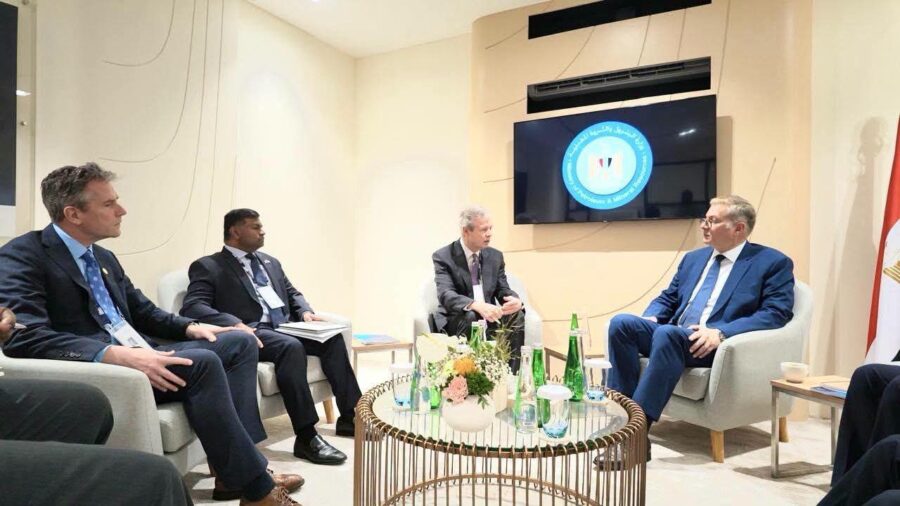
Egyptian Petroleum Minister Karim Badawi met with Chevron Vice-President of Exploration Kevin McLachlan during the Abu Dhabi International Petroleum Exhibition and Conference (ADIPEC) to review natural gas exploration activities. The talks centered on expanding operations in the Eastern Mediterranean and integrating regional gas assets into Egypt’s processing facilities.
Key Takeaways
- Exploration progress: Recent drilling at the Nargis-2 well confirmed gas-bearing formations, building on findings from the Nargis-1 discovery.
- Chevron portfolio: The company is currently active in six offshore exploration areas, including Nargis, North Dabaa, and North Cleopatra.
- Regional integration: Officials discussed connecting Cyprus’s Aphrodite gas field to Egyptian infrastructure for processing and liquefaction.
- Investment climate: Minister Badawi pledged to provide a stable, transparent regulatory environment to encourage further foreign investment.
- Strategic goals: Both parties aim to accelerate appraisal activities to boost domestic natural gas production and regional trading capabilities.
Expanding Mediterranean Operations
Drilling results at the Nargis-2 well have provided positive indications for resource development, according to the Ministry of Petroleum. The findings confirmed the extension of gas-bearing layers identified during earlier exploration at Nargis-1. Chevron and its partners are continuing appraisal activities to quantify potential reserves and evaluate development timelines for these offshore sites.
Beyond the Nargis field, Chevron holds interests in North Dabaa, Lotus, Northwest Atoll, North Simián, and North Cleopatra. In some of these areas, Chevron operates in partnership with Shell. The ministry indicated that these projects are central to its strategy of maximizing domestic petroleum resources.
Regional Infrastructure and Investment
A primary focus of the meeting involved the Aphrodite gas field in Cyprus. The two sides reviewed progress toward finalizing agreements that would route production to Egypt. This project relies on utilizing Egypt’s existing natural gas processing and liquefaction facilities.