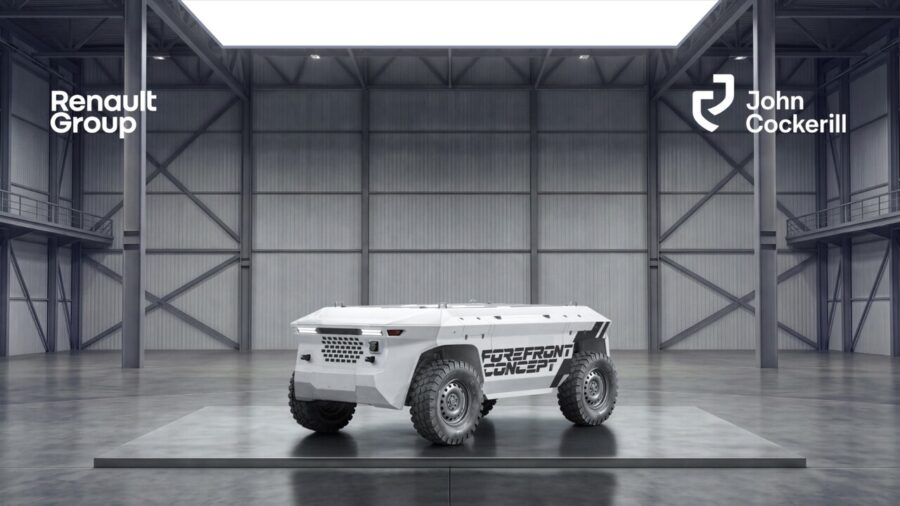
A new collaboration between automotive manufacturer Renault and engineering firm John Cockerill has produced the Forefront Concept, a remote-controlled platform designed for high-risk operations. The vehicle, unveiled recently, aims to address logistical and tactical challenges in demanding environments.
Capabilities and Specifications
The Forefront Concept functions as an unmanned ground vehicle engineered for endurance and heavy transport. According to company specifications, the platform possesses an operational range of up to 400 kilometers on a single deployment. Its chassis is designed to support a payload capacity of one metric ton, allowing it to move significant cargo or equipment into areas that may be inaccessible or hazardous for human-operated vehicles.
Operational Focus
The development of the Forefront system highlights a shift toward autonomous and remote-controlled technologies in industrial and defense sectors. By combining Renault’s automotive engineering expertise with John Cockerill’s defense capabilities, the project seeks to provide a robust solution for missions requiring sustained operation without direct human presence. The platform is intended to navigate difficult terrain while maintaining communication with remote operators.
The companies have not yet announced a timeline for full-scale production or specific deployment dates for the concept. Future phases of the project are expected to focus on testing the platform’s reliability under various environmental conditions and integrating additional sensor suites for enhanced autonomy.
Why it matters: This development signals a growing trend in the integration of automotive manufacturing with defense technologies. For regions in the Middle East and globally, the deployment of such unmanned systems could significantly alter logistics, border security, and emergency response strategies by reducing the risk to personnel in conflict zones or harsh, remote environments.