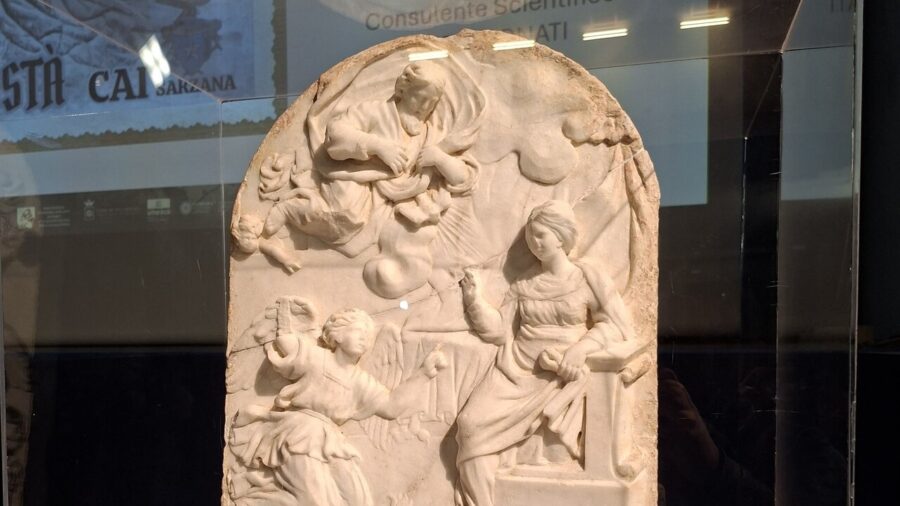
Restoration work has been completed on the Maestà di Moneta, a 17th-century votive sculpture located in the mountains near Carrara, Italy. The marble monument, which historically served as a religious marker for workers traveling to the local quarries, underwent a conservation project to preserve its structural integrity.
Preserving Local Heritage
The Maestà di Moneta is carved from Carrara marble, a material historically significant to the region. It was originally placed along a mountain path used by quarrymen to access extraction sites. These types of shrines, known as “maestà,” were common in the area, serving both as points of devotion and navigational landmarks for those traversing the rugged terrain.
Conservationists focused on stabilizing the stone, which had been exposed to centuries of weathering in the mountain environment. The project sought to maintain the sculpture’s original form while addressing damage caused by environmental factors. The restoration ensures the monument remains visible to hikers and residents who utilize the historic mountain trails.
Historical Context
The Carrara region is known for its long history of marble extraction, dating back to the Roman era. The Maestà di Moneta reflects the intersection of labor and religious practice during the 1600s, when quarry workers often relied on such shrines for spiritual guidance during their daily commutes.
Why it matters: This restoration highlights the ongoing efforts to protect cultural artifacts embedded in the landscape of Italy’s marble-producing regions. Maintaining these historical markers preserves the connection between the area’s industrial past and its traditional religious customs.