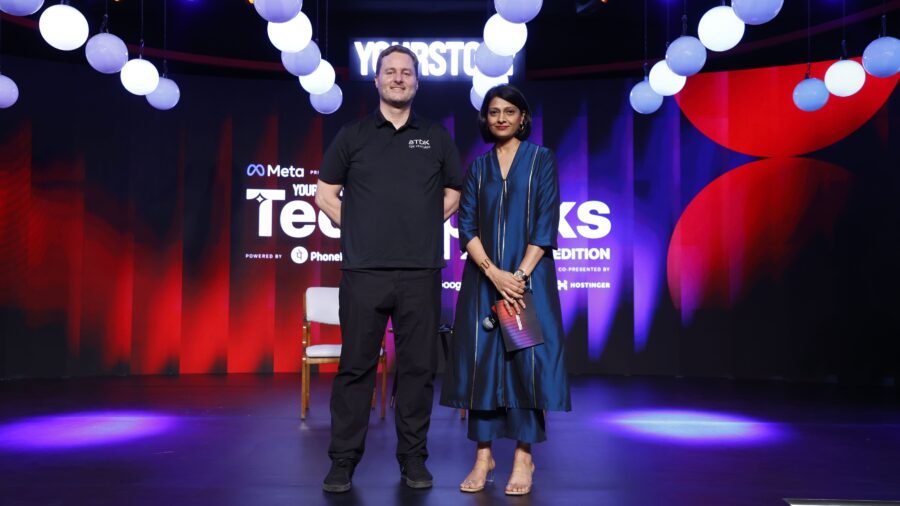
TDK Ventures’ founder Nicolas Sauvage said the firm sees India as a key platform for deep‑technology startups to scale globally.
2019
TDK Ventures was launched in Silicon Valley as the corporate venture arm of Japan’s TDK Corporation.
2023
The venture firm opened its first overseas hub in Bengaluru, marking its entry into the Indian market.
2025
According to a Nasscom–Zinnov report, India hosted more than 4,200 deep‑tech startups that raised $2.3 billion, a 37 % increase from the previous year.
2026
At the TechSparks 2026 conference, Sauvage told a fireside audience that Indian talent is increasingly staying home and opting for startups over corporate labs, a shift he called the biggest change in the sector over the past decade.
2024
TDK Ventures co‑led a $20.5 million Series A round for Bengaluru‑based spacetech firm Ethereal Exploration Guild, which is developing a fully reusable medium‑lift launch vehicle.
August 2026
German chipmaker Infineon announced its plan to acquire C2i Semiconductors, a Bengaluru power‑management startup founded in 2024 by former Texas Instruments engineers.
October 2026
Infineon completed the acquisition of C2i, confirming the rapid exit timeline for the young company.
Where the story stands
Sauvage highlighted three sectors where India can compete globally: space technology, AI‑related power management, and the broader deep‑tech ecosystem driven by a culture of “jugaad”—resourceful innovation under constraints. He noted that India’s space economy is projected by IN‑SPACe to grow from $8.4 billion to $44 billion by 2033, expanding its global share from 2 % to 8 %.
Why it matters: The rise of Indian deep‑tech firms offers investors and partners new opportunities to source breakthrough technologies locally, while the country’s growing funding pool and government support aim to position it as a global hub for sectors such as space and AI infrastructure.