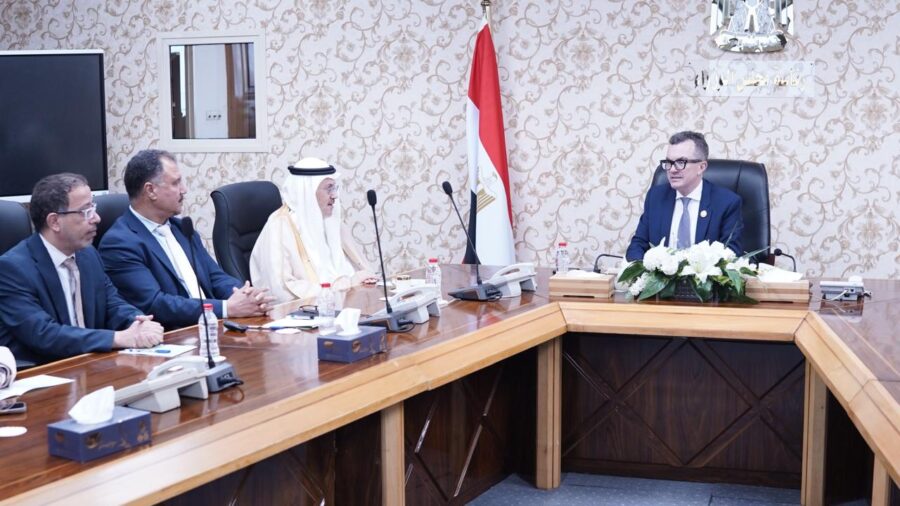
CAIRO — Egypt’s Minister of Planning and Economic Development, Ahmed Rostom, met with Adeeb Yousuf Al-Aama, CEO of the International Islamic Trade Finance Corporation (ITFC), to finalize consultations on a new multi-year partnership strategy. The meeting marked the conclusion of a delegation visit by the Islamic Development Bank (IsDB) Group, which held discussions with Egyptian ministries to identify financing priorities.
Aligning Development Priorities
The upcoming joint country strategy, covering 2027 through 2031, focuses on aligning the IsDB Group’s resources with Egypt Vision 2030. Rostom emphasized the need for sustainable financing in strategic sectors, specifically energy and food security. He stated that the partnership aims to enhance the export capabilities of Egyptian companies and improve access to regional and international markets.
Rostom also highlighted the necessity of institutional capacity-building programs, particularly for small and medium-sized enterprises (SMEs). The goal is to foster trade integration across Arab and African nations.
Expanding Private Sector Support
Al-Aama reaffirmed the ITFC’s commitment to the Egyptian market, noting that the partnership has grown significantly since 2008. The ITFC has provided more than $26.4 billion in approved financing across five framework agreements. Moving forward, the corporation plans to expand support for the private sector by opening new credit lines through local banks to facilitate trade flows.
Both parties reviewed the core pillars of the 2027-2031 strategy, which prioritize economic sectors that directly impact citizens’ quality of life. The discussions underscored the need to strengthen the Egyptian economy against global volatility.
Why it matters: This partnership is central to Egypt’s economic roadmap, as it secures billions in financing for critical infrastructure and trade. By targeting SMEs and export-driven growth, the strategy seeks to stabilize the domestic economy and improve living standards while integrating Egypt more deeply into regional supply chains.