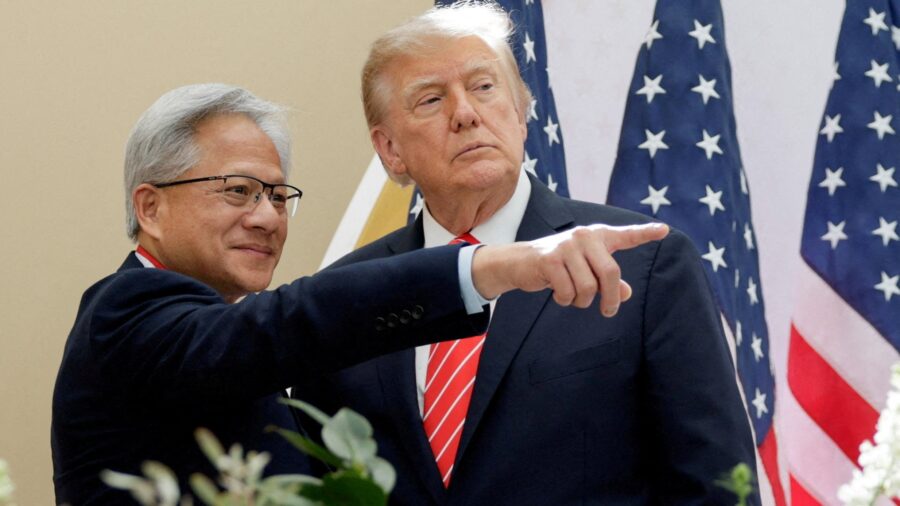
Nvidia has opened an internal investigation into its founder and chief executive Jensen Huang following allegations of involvement in a Chinese espionage scandal.
The probe comes as concerns rise over potential security breaches linked to the rapid growth of artificial intelligence technologies. Huang, who transformed Nvidia from a gaming graphics card maker into the world’s second‑largest company by market value at $4.5 trillion, is a central figure in Silicon Valley’s AI boom.
According to company statements, the investigation will examine any communications or transactions that could indicate collaboration with Chinese intelligence services. Nvidia has not disclosed the specific nature of the allegations or identified any wrongdoing at this stage.
Huang’s leadership style, described as highly personalist, has kept decision‑making tightly centralized within a vertical corporate structure. This governance model has allowed him to retain significant control over strategic direction, a factor that investors and regulators are now scrutinizing.
Background on Nvidia and AI Expansion
Founded in 1993, Nvidia originally focused on graphics processing units for video games. Under Huang’s direction, the firm pivoted to AI hardware, supplying chips that power data‑center workloads, autonomous vehicles and large‑scale language models. The company’s market capitalization surged to $4.5 trillion, making it the second‑most valuable publicly traded firm globally.
Huang’s public profile and charismatic leadership have been credited with driving the company’s aggressive acquisition strategy and its dominance in the AI chip market.
Implications and Next Steps
Nvidia says the investigation will be conducted by an independent third party and that findings will be reported to the board. The company has pledged to cooperate with any relevant authorities.
Analysts note that any adverse outcome could affect Nvidia’s stock, its relationships with government contractors, and broader confidence in the AI supply chain.