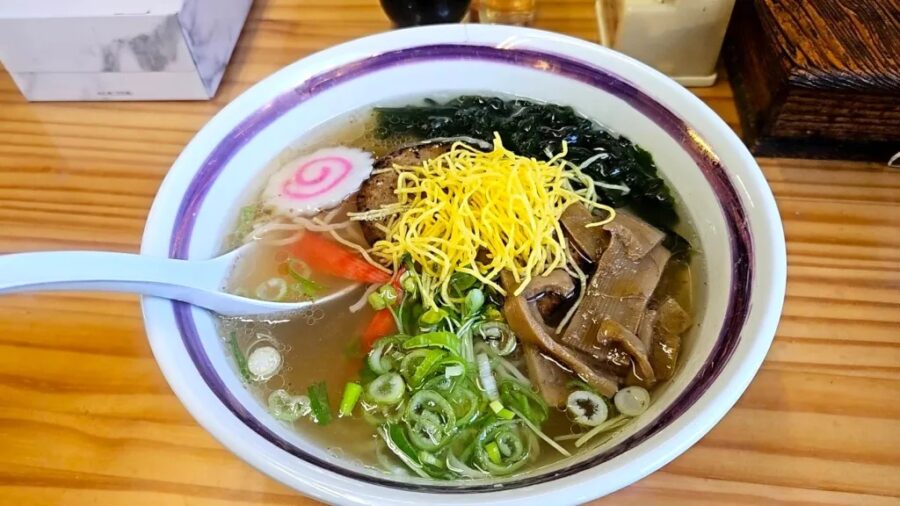
A long-standing restaurant in Sagamihara, Kanagawa Prefecture, has introduced a fusion menu item featuring a hamburger patty served in a bowl of ramen. The dish is available at Koryu, an establishment that has operated for approximately 40 years near Lake Sagami.
The restaurant, which typically focuses on traditional ramen styles such as shoyu and miso, added the hamburger steak ramen to its menu for 1,080 yen. The owner, who manages the restaurant independently, prepares the dish with standard ramen toppings, including green onions, bamboo shoots, seaweed, thin egg strands, and naruto fish cake. A reporter who sampled the dish noted that the broth offered a strong umami flavor with a clean finish, suggesting the pork stock is simmered for an extended duration.
Culinary Context
Fusion cuisine often blends distinct culinary traditions, but ramen and hamburger patties are rarely combined in Japanese dining. Koryu, whose name translates to “Lake Dragon,” maintains a traditional aesthetic despite the inclusion of the unconventional noodle dish. The restaurant’s standard menu items, such as soy sauce-based broth ramen, remain available starting at 680 yen.
Restaurant Background
Located away from major tourist hubs, the restaurant offers an atmosphere consistent with its four decades of operation. The establishment is situated in Kanagawa, a prefecture bordering Tokyo to the south. The owner operates the facility primarily on his own, serving a local clientele rather than tourists. While the hamburger steak ramen represents a departure from the shop’s traditional offerings, the presentation of the dish remains consistent with standard ramen expectations.
Why it matters: This story highlights the evolving nature of traditional Japanese cuisine in local, non-tourist settings. While fusion trends often originate in metropolitan centers, the adoption of Western-style ingredients like hamburger patties into classic ramen preparations at long-established, family-run shops demonstrates the adaptability of local food culture. For international readers, it illustrates how even deeply rooted culinary traditions in Japan are open to experimentation and modern influences.