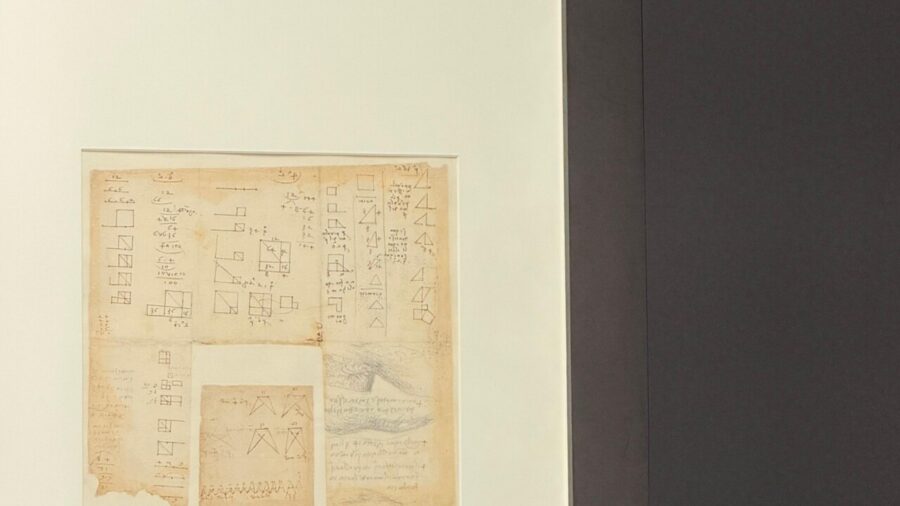
Four original pages from Leonardo da Vinci’s Codex Atlanticus are currently on display in the Friuli region of Italy. The exhibition highlights the polymath’s scientific and philosophical observations regarding the natural world, specifically focusing on the relationship between creation and destruction.
Key Details of the Exhibition
- Original Manuscripts: The display features four authentic, handwritten sheets from the renowned Codex Atlanticus collection.
- Thematic Focus: Curators have centered the exhibition on Leonardo’s theories concerning the cyclical nature of physical processes.
- Philosophical Insight: The works demonstrate Leonardo’s conclusion that creation and destruction are distinct phases of the same singular process.
- Regional Significance: This rare public viewing brings historical artifacts from the Renaissance master to the Friuli region.
Exploring Leonardo’s Scientific Inquiry
The Codex Atlanticus is the largest collection of Leonardo da Vinci’s drawings and writings, spanning a wide range of subjects including anatomy, engineering, and botany. The pages selected for this exhibition provide a focused look at his understanding of physical transformation. According to the exhibition organizers, Leonardo viewed the phenomena of the natural world not as isolated events, but as interconnected stages of development and decay.
These specific folios illustrate how the artist and inventor documented his observations. By examining these manuscripts, researchers and visitors can trace Leonardo’s analytical approach to the forces shaping the environment. The presentation aims to contextualize his scientific notes alongside his philosophical reflections, emphasizing that his technical studies were deeply intertwined with his conceptual understanding of nature.
Why it matters: This exhibition provides rare access to primary source material from one of history’s most influential thinkers. By highlighting Leonardo’s theories on the unity of creation and destruction, the display offers insight into the foundational observations that informed modern scientific thought, bridging the gap between historical artistry and empirical inquiry.