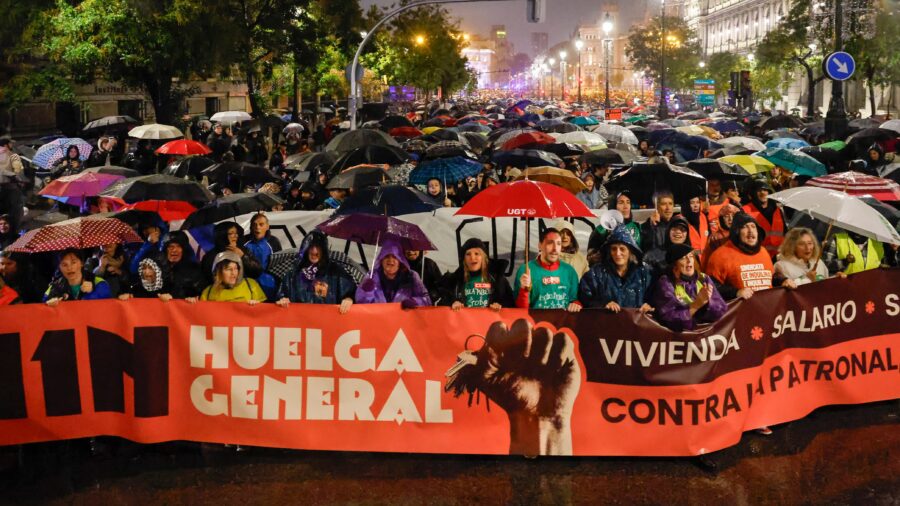
A day after the November 11 general strike, the gap between organized labor and employer associations remains wide. Both sides are interpreting the day’s events through conflicting narratives, with unions claiming success and employers dismissing the action as a failure.
The strike, organized to protest the housing crisis, left both sides relying on their own estimates rather than official government data. While energy consumption figures and other metrics have yet to be finalized, the lack of consensus has turned the post-strike period into a battle over statistics.
Conflicting Estimates on Participation
Unions CC OO and UGT released updated figures on Thursday, highlighting what they described as an uneven but significant response across different regions. The labor groups reported a participation rate of 84% in Catalonia and 48% in the Balearic Islands. These figures align with the asymmetrical support patterns union leaders anticipated before the walkout began.
In sharp contrast, the CEOE, the primary employer organization, offered a drastically different assessment. The group characterized the strike as a failure, estimating that overall participation among the working class reached only 5%. This stark discrepancy underscores the difficulty in quantifying the impact of the protest without centralized, verified reporting.
The Future of Housing Protests
The immediate aftermath of the strike leaves the housing issue unresolved. Unions maintain that the turnout sends a clear message to policymakers about the urgency of the housing crisis. Employers, meanwhile, continue to signal that work stoppages are not the appropriate mechanism for addressing structural economic challenges.
As both sides await official reports to confirm the actual scale of the strike, the focus shifts to whether this mobilization will force new negotiations or legislative changes. The public will likely look to future government data to determine the true extent of labor participation.