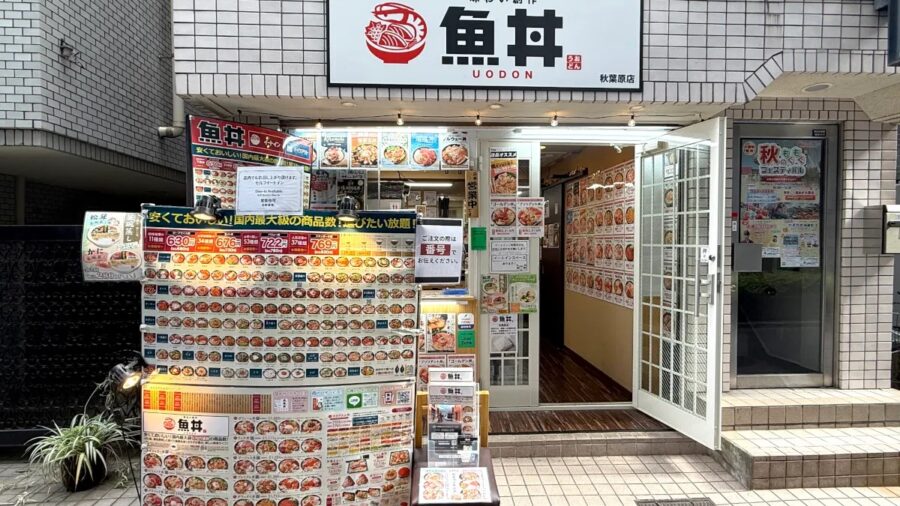
A sushi restaurant in Tokyo’s Akihabara district has opened with a customization model that allows for more than 1.7 million unique bowl combinations. Located near Akihabara Station, Uodon opened in 2025 and utilizes a modular ordering system for its rice bowls.
Customization and Menu Strategy
While Uodon offers a nearly inexhaustible list of toppings, the restaurant provides a signboard outside featuring 150 suggested combinations to assist customers with selection. The menu also includes data on the top three most popular orders for both male and female patrons to guide diners.
During a recent visit, staff ordered the most popular item among male customers: a Seared Salmon Belly bowl topped with mayonnaise and negitoro, priced at 930 yen, or approximately $5.85 USD. While mayonnaise is not a traditional sushi condiment, the restaurant caters to local preferences for filling, strongly flavored dishes. Despite the inclusion of non-traditional ingredients, the restaurant maintains a selection of standard vinegared rice and fish options, requiring the raw ingredients to meet quality standards without additional seasoning.
Restaurant Context
Uodon is situated east of Akihabara Station, a quieter area compared to the high-traffic tourist zones located on the west side of the transit hub. The business model emphasizes variety, aligning with the district’s reputation for deep catalogs of niche products, including second-hand electronics and media.
Why it matters: The restaurant’s model highlights a growing trend in Japanese casual dining that prioritizes extreme customization and accessibility over rigid culinary tradition. For international markets, including the Middle East and Egypt, this approach demonstrates how fast-casual establishments can successfully blend local flavor preferences—such as the use of mayonnaise or heavier seasonings—with traditional staples like sushi to appeal to younger, convenience-focused demographics.