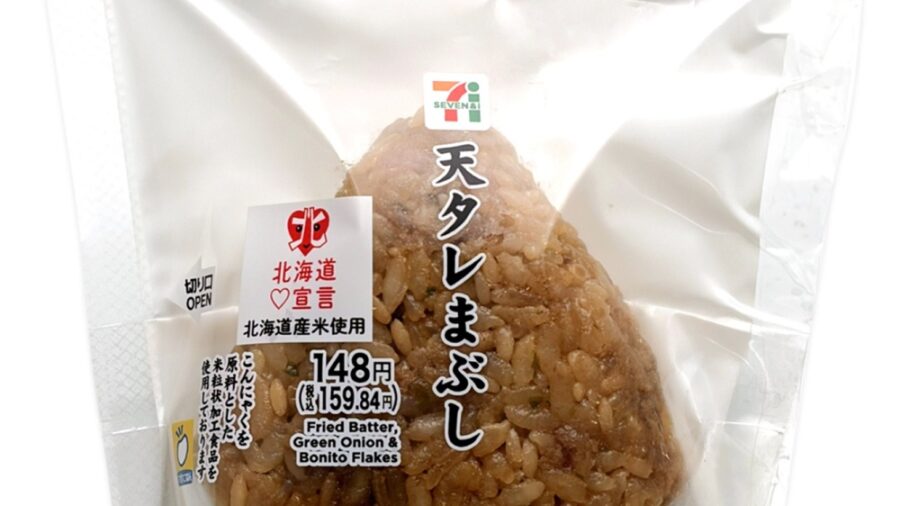
7-Eleven has released a new onigiri product in Japan that incorporates a processed food substitute alongside traditional rice. The item, marketed as Tentaremabushi, blends standard rice with a konnyaku-based ingredient shaped to mimic rice grains.
November 17
The company launched the Tentaremabushi rice ball across its Japanese retail locations. The product name references its tempura flakes and savory sauce, which coats the contents. While packaging highlights the use of Hokkaido-grown rice, a notice on the label indicates the product also contains a processed starch substitute derived from konnyaku, a gelatinous flour made from konjac potatoes.
Product Composition
According to the ingredient list, regular rice remains the primary component. The konnyaku-based pieces are processed into small, teardrop shapes intended to be visually indistinguishable from natural rice grains when coated in sauce. Konnyaku is flavorless and firm, commonly used in Japanese cuisine for its distinct texture.
Cost Considerations
Market analysts suggest the inclusion of konnyaku may serve as a cost-management strategy. Rice prices in Japan have increased significantly since the pandemic, leading to higher retail prices for convenience store onigiri. At 160 yen (approximately $1 USD), the Tentaremabushi is positioned as a lower-cost option compared to other premium rice ball offerings currently available in the Japanese market.
Current Status
The Tentaremabushi remains available in 7-Eleven Japan stores. While the company has not explicitly stated the reason for the ingredient substitution, the move reflects broader industry efforts to manage rising food costs while maintaining accessible price points for consumers.
Why it matters: This development highlights the impact of rising agricultural commodity prices on everyday consumer goods. For markets dependent on imported food staples, such as those in the Middle East and Egypt, the use of partial substitutes in traditional products underscores the challenges retailers face in balancing affordability with consumer expectations for quality.