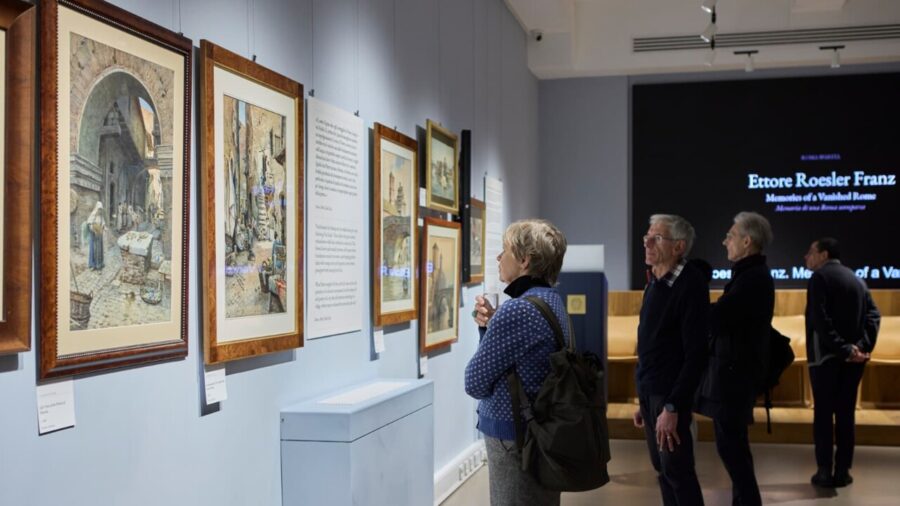
An exhibition featuring 19th-century watercolors by Ettore Roesler Franz has opened at the Italian Cultural Institute in London. The collection highlights the historical architecture and urban landscape of Rome during a period of significant transformation.
Key Takeaways
- Exhibition content: The showcase displays 30 watercolor paintings created by the Rome-born artist during the late 1800s.
- Historical focus: The works document neighborhoods and structures that underwent demolition or renovation during that era.
- Venue details: The Italian Cultural Institute in London is hosting the presentation for the public.
- Cultural significance: Roesler Franz is recognized for preserving the visual history of Rome before the city’s modernization.
Documenting a Changing Rome
Ettore Roesler Franz, an artist active in the late 19th century, produced a series of watercolors titled ‘Roma sparita,’ or ‘Vanished Rome.’ The works on display in London represent a selection from this broader project. The paintings provide a detailed record of the city’s streets, alleyways, and buildings prior to the urban planning projects undertaken after Rome became the capital of the Kingdom of Italy.
The exhibition offers attendees a glimpse into the architectural heritage of the city. Historians and art critics often cite Roesler Franz’s work as a primary visual source for studying the topographical evolution of Rome between 1870 and 1890.
The Artist’s Legacy
The collection serves as a link between 19th-century artistic practices and modern urban history. By capturing scenes that were slated for destruction to accommodate new infrastructure, Roesler Franz created a tangible archive of the city’s past.
Why it matters: This exhibition provides international audiences with a perspective on the preservation of cultural heritage during rapid urban development. For observers in historical centers, the works illustrate the tension between modernizing infrastructure and maintaining the architectural character of historic cities.