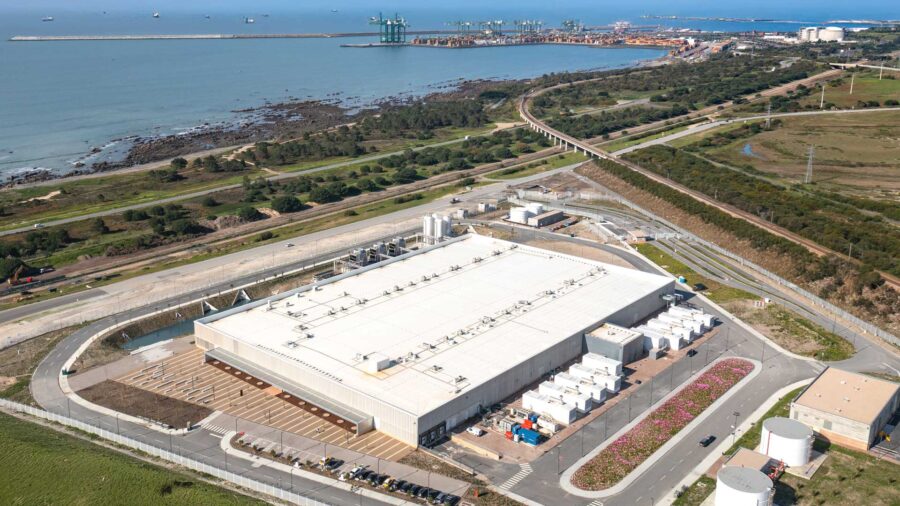
The coastal municipality of Sines, Portugal, is currently hosting the construction of one of the world’s largest data center complexes. While the town has a population of 14,198, the facility is projected to consume up to 20% of Portugal’s total electricity usage once fully operational.
Development of the site began in 2021, preceding the surge in global demand for artificial intelligence infrastructure. Sines, located south of Lisbon, has historically served as a significant industrial center. It currently houses Portugal’s largest port by cargo volume and a substantial industrial complex, featuring petrochemical plants, refineries, and power generation facilities.
Infrastructure and Industrial Integration
The transition of Sines into a technology hub leverages existing heavy infrastructure. The area already supports major operations, including facilities owned by the energy company Repsol. Planners are integrating the new data center capacity into this pre-existing industrial framework, which includes established power grid connections and logistical support.
The Growing Demand for AI
The expansion in Sines coincides with the rapid adoption of artificial intelligence technologies globally. Data centers serve as the physical backbone for AI, requiring massive amounts of electricity for cooling and server operation. Industry analysts note that as demand for AI services increases, the need for large-scale facilities capable of housing thousands of servers grows proportionally.
Future development will depend on the capacity of the local power grid to sustain the high energy demands of the data center complex without disrupting the existing industrial operations in the region.
Why it matters: This project highlights the massive energy requirements needed to support modern digital infrastructure. For regions like the Middle East and Egypt, which are also investing heavily in digital transformation and data center capacity, Sines serves as a case study on the challenge of balancing industrial growth with national energy security and grid capacity.