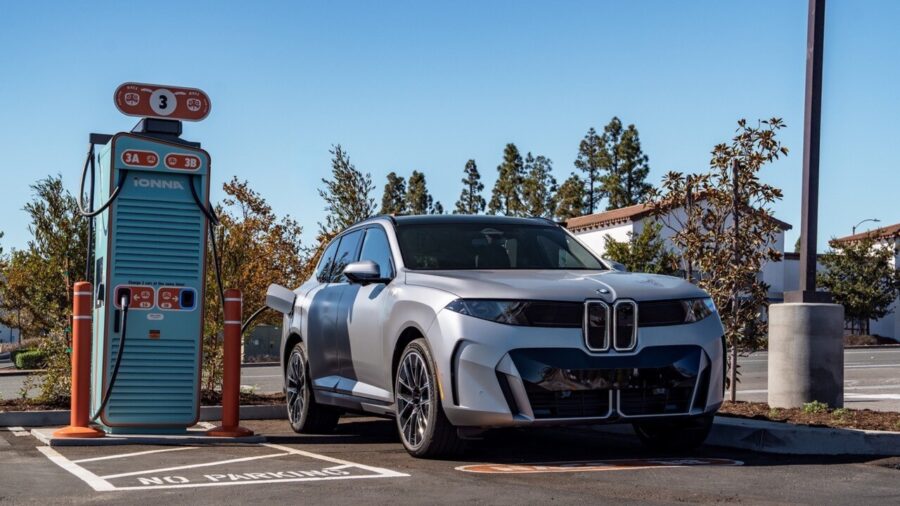
A modified BMW iX5 recently demonstrated the ability to charge at speeds up to 460 kW, a milestone that could significantly reduce wait times for electric vehicle drivers. The demonstration, held in the United States, showcased the potential of BMW’s upcoming sixth-generation battery technology.
High-Speed Charging Milestone
During the test, the vehicle added 363 kilometers (approximately 225 miles) of range in just 10 minutes. This performance was achieved using charging infrastructure provided by IONNA and Alpitronic. The test focused on the capabilities of the automaker’s Gen6 battery architecture, which is designed to support faster energy intake compared to current production models.
BMW engineers utilized the high-power charging station to push the limits of the vehicle’s thermal management and power electronics. The ability to replenish a significant portion of a battery’s capacity in the time it takes to stop for a brief break is a primary goal for manufacturers seeking to address consumer concerns regarding range anxiety and charging duration.
Infrastructure and Future Integration
The collaboration with IONNA and Alpitronic highlights the importance of matching vehicle technology with compatible hardware. IONNA, a joint venture involving several major automakers, is working to expand high-power charging networks across North America. Alpitronic provides the specialized charging hardware necessary to deliver such high power outputs consistently.
While this demonstration used a prototype configuration, it provides a benchmark for the next generation of BMW electric vehicles. The company intends to integrate these battery and charging advancements into future production lines, aiming to streamline the charging experience for long-distance travel.
Why it matters: As the automotive industry shifts toward electrification, reducing charging downtime is critical for mass adoption. This technology directly addresses the key barrier of efficiency, promising a future where electric vehicle refueling times approach the convenience of traditional combustion engine stops.
 Egypt
 Saudi Arabia
 UAE
 Spain
 United Kingdom
 United States
 China
 India