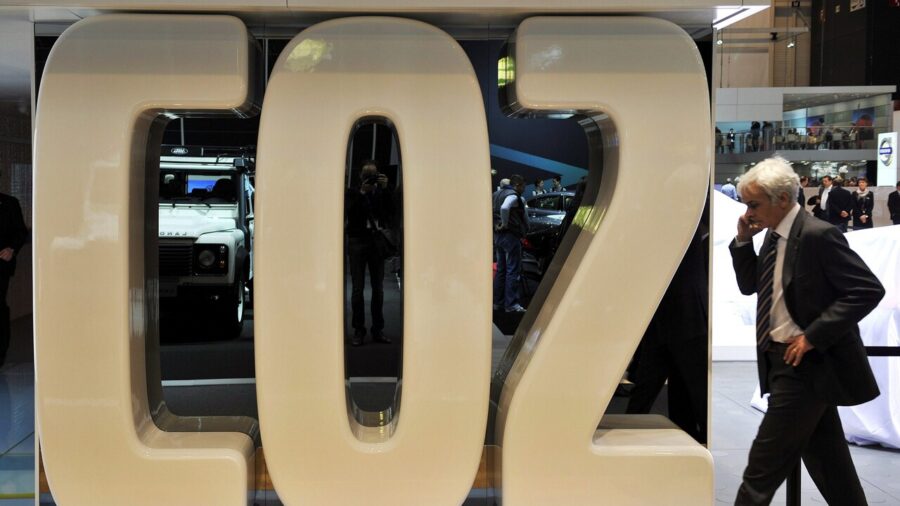
European Parliament committees on transport and environment reported on Tuesday that the centre-right European People’s Party (PPE), the centre-left Socialists & Democrats (S&D) and the liberal Renew Europe groups have reached a preliminary agreement to tighten CO2 emission standards for new cars.
The accord, reached during committee meetings in Brussels, was described by the committees as the first concrete step toward a unified EU policy on automotive emissions. The agreement will be forwarded to the full parliament for a vote later this month.
According to the committee chair, the deal includes a target to cut average fleet emissions by 55% by 2030 compared with 2021 levels, aligning with the EU’s Green Deal objectives. The proposal also calls for a gradual phase‑out of internal‑combustion engine vehicles, with a 2035 deadline for new car registrations to be zero‑emission.
Key provisions
The draft legislation proposes:
- Mandatory reporting of real‑world CO2 emissions by manufacturers.
- Increased fines for companies that exceed the set limits.
- Financial incentives for electric vehicle (EV) production and infrastructure.
Italy, represented by the transport committee, endorsed the proposal, stating that it would boost domestic EV manufacturing and help meet national climate goals. The transport committee of another member state, identified only as “Tran,” also expressed support, citing the need for a level playing field across the EU.
Background and next steps
The EU has faced pressure to tighten car emission rules after the European Court of Justice ruled that the current standards were insufficient. Earlier this year, the European Commission announced a review of the 2020 CO2 standards, prompting negotiations among parliamentary groups.
Following the committee endorsement, the proposal will be debated in the full European Parliament. If approved, it will be sent to the Council of the European Union for final adoption.
Why it matters: The agreement could reshape the automotive market across Europe, accelerating the shift to electric vehicles and impacting manufacturers, consumers and the region’s climate targets.
 Egypt
 Saudi Arabia
 UAE
 Spain
 United Kingdom
 United States
 China
 India