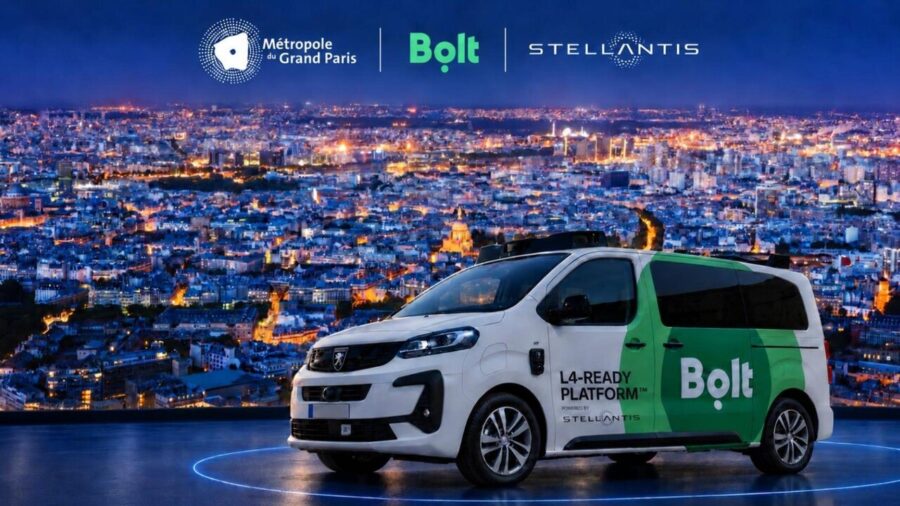
Greater Paris, ride‑hailing platform Bolt and automotive group Stellantis announced a joint plan to introduce autonomous mobility services beginning in 2028.
Key takeaways
- Partnership formed: The three entities will cooperate on a pilot program for driverless transport.
- Timeline set: Commercial deployment is targeted for 2028.
- Geographic scope: Up to five French municipalities will host the initial trials.
- Technology focus: The project will test autonomous vehicles integrated with Bolt’s app platform.
- Strategic aim: Stellantis aims to expand its presence in shared‑mobility services.
Details of the collaboration
The Greater Paris authority will provide regulatory support and infrastructure access for the autonomous fleet. Bolt will supply its digital booking system, allowing users to request rides from the driverless cars through its existing app. Stellantis will contribute the vehicles, leveraging its research into electric and autonomous technology.
Planned pilot locations
Authorities indicated that the pilot could be launched in as many as five municipalities within the Île‑de‑France region. Specific towns have not yet been disclosed, but the selection will consider readiness of road networks and local demand for shared transport.
Future outlook
If the trial proves successful, the partners intend to scale the service beyond the initial sites, potentially expanding to other French regions and European cities. The collaboration reflects broader industry trends toward integrating autonomous vehicles into urban mobility ecosystems.
Why it matters: The initiative marks one of the first large‑scale autonomous mobility pilots in France, combining regional authority support with private‑sector technology. Successful deployment could reshape public transport options for residents of Paris and neighboring areas, influencing future mobility policies across the Middle East and Egypt, where similar urban challenges exist.
 Egypt
 Saudi Arabia
 UAE
 Spain
 United Kingdom
 United States
 China
 India