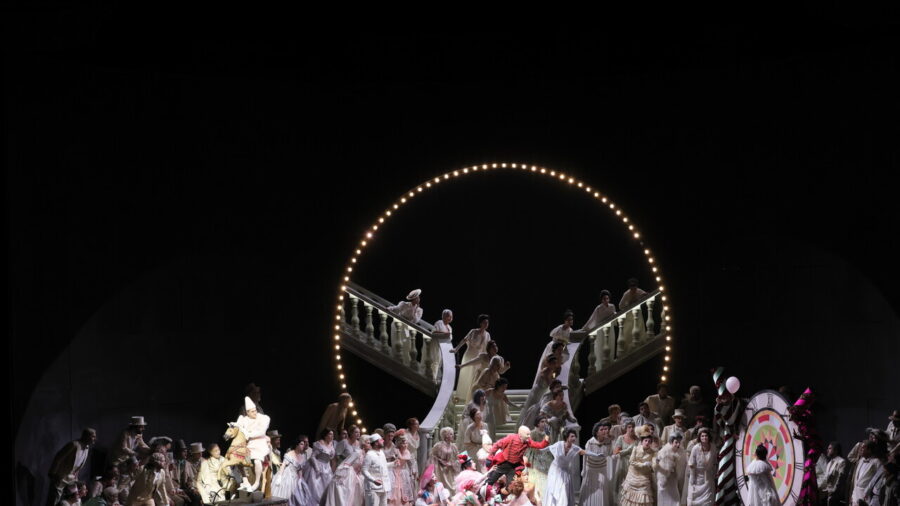
The Teatro alla Scala in Milan presented a production of Charles Gounod’s opera Faust, conducted by Daniele Rustioni and directed by Damiano Michieletto, with scenic design by Paolo Fantin. The performance received applause from the audience during its recent run.
A Circus-Themed Interpretation
Director Damiano Michieletto chose to reimagine the classic narrative within the confines of a circus ring. This staging decision placed the character of Marguerite, the opera’s central female figure, within a circus environment. The production sought to highlight the dramatic elements of the story through this specific visual context, contrasting the traditional operatic setting with the imagery of the circus.
Production Background
The staging of Faust is a collaborative effort involving the musical direction of Rustioni and the vision of Erath and Michieletto. The production utilizes the circus motif to emphasize the tragedy of Marguerite, moving away from conventional period depictions of the 19th-century work. This approach has been a focal point of the current season’s programming at the historic Milanese venue, drawing attention to how modern directors reinterpret established repertoire.
Why it matters: This production underscores the ongoing trend of experimental staging in major European opera houses, where directors frequently update classical works to reach contemporary audiences. For observers in the cultural sector, the reception of such reinterpretations at La Scala serves as a bellwether for the acceptance of avant-garde directorial choices in traditional settings.
 Egypt
 Saudi Arabia
 UAE
 Spain
 United Kingdom
 United States
 China
 India
