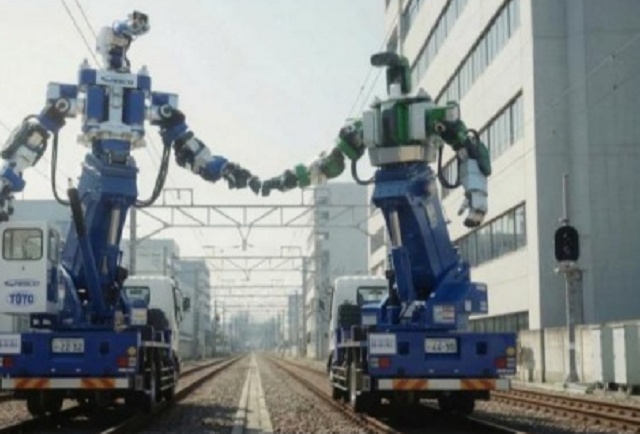
Near Nagano Prefecture’s Nobeyama Station, a humanoid machine mounted on a dual-purpose vehicle recently cleared overhanging tree branches from the tracks of the Koumi Line. Operated by the East Japan Railway Company (JR East), the robot uses a multi-pronged claw to stabilize debris and a chainsaw to cut limbs that threaten safe rail operations.
Expanding the Maintenance Fleet
JR East integrated these multifunction robots into its maintenance fleet in March 2024. The machines are updated versions of units first introduced by JR West earlier that year. Designed for versatility, the robots can travel on rails like a train or drive on streets like a truck. The company utilizes these machines to assist maintenance crews in preventive tasks, ensuring that infrastructure remains clear and operational.
Historically, JR East scheduled heavy maintenance projects during overnight hours to avoid disrupting passenger service. However, the company is adjusting its operations to accommodate a growing number of workers requesting daytime shifts. Because the robots require human operators, this shift in scheduling directly impacts how and when the machines are deployed.
Public and Operational Impact
The sight of the industrial robots has drawn significant attention online, with social media users comparing the machines to mecha from anime series and science fiction films. While the robots have garnered interest for their unique design and capabilities, their deployment represents a practical step in railway safety.
JR East acknowledged that moving more maintenance projects to daylight hours will require temporary track closures during regular operating times. The company stated it hopes passengers will accept these service adjustments, particularly as the use of advanced machinery aims to improve overall network reliability and safety.
 Egypt
 Saudi Arabia
 UAE
 Spain
 United Kingdom
 United States
 China
 India
