President Al‑Sisi Sets Aggressive Digital Agenda for Egypt
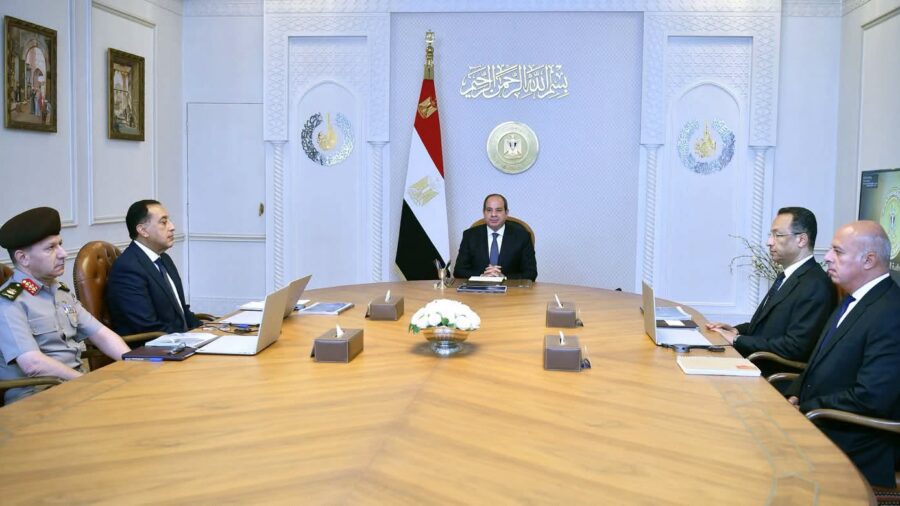
In a decisive push to reshape Egypt’s economy, President Abdel Fattah Al‑Sisi ordered a sweeping expansion of large‑scale data centres, 5G networks, cloud computing and artificial intelligence (AI) initiatives. The directives, delivered during a high‑level meeting with Prime Minister Mostafa Madbouly, Communications and Information Technology Minister Raafat Hindi, and Armed Forces Signals Department Director Hany Mahmoud Mansour, are aimed at propelling Egypt’s digital exports to $8 billion by 2028 and digital outsourcing revenues to $12 billion by 2029.
Key Pillars of the New Digital Strategy
The presidency’s statement highlighted six inter‑linked pillars that will underpin the country’s digital transformation:
- Infrastructure expansion: Rapid rollout of 5G, reinforcement of communications resilience, and the construction of new data‑centre campuses across strategic locations.
- Cloud and AI investment: Incentives for private‑sector cloud services and AI research, with a focus on Arabic‑language generative models.
- Electronics localisation: Boosting domestic electronics design firms to 120 by 2030 and fostering a local supply chain for critical components.
- Cybersecurity and digital sovereignty: Strengthening defenses and promoting home‑grown security solutions.
- Government digital services: Extending the unified government services card and integrating ministries’ databases for seamless citizen access.
- Export promotion: Scaling IT‑service exports and positioning Egypt as a regional hub for outsourced digital work.
Data Centres as the Backbone of the Digital Economy
The presidency described large‑scale data centres as a “key pillar of the digital economy.” By 2030, Egypt aims to host at least ten Tier‑III/Tier‑IV facilities, capable of delivering high‑availability services to regional and global clients. The government plans to offer tax breaks, streamlined licensing, and dedicated power‑grid connections to attract multinational operators such as Amazon Web Services, Microsoft Azure and Google Cloud.
5G Rollout and Telecommunications Resilience
Al‑Sisi’s orders call for an accelerated 5G deployment that will cover 70 % of the population by 2026, up from the current 30 % coverage. The strategy also mandates diversification of fiber‑optic routes and the establishment of backup satellite links to mitigate concentration risks. These measures are intended to cement Egypt’s status as a “regional and international hub for data centres” and to support latency‑sensitive applications such as tele‑medicine, smart‑city platforms and industrial IoT.
Artificial Intelligence: From “Karnak” to Market‑Ready Solutions
The meeting reviewed progress on the government’s “Karnak” AI programme, a flagship effort to achieve digital sovereignty and develop Arabic‑language generative AI tools. The Applied Innovation Center, housed within the Ministry of Communications and Information Technology, is tasked with turning research prototypes into commercial products for sectors ranging from finance to agriculture.
Boosting Digital Outsourcing Exports
Targeting $12 billion in outsourcing revenue by 2029, the administration will launch a suite of incentives for software development firms, BPO providers and AI‑training companies. These include:
- Reduced corporate tax rates for qualifying export‑oriented firms.
- Access to a national talent pool through partnerships with universities and technical institutes.
- Streamlined visa processes for foreign experts collaborating on joint ventures.
Analysts predict that, if fully implemented, Egypt could climb into the top five outsourcing destinations in the Middle East and North Africa (MENA) region, challenging established players such as Morocco and Tunisia.
Unified Government Services Card: Expanding Digital Public Services
The meeting also examined the expansion of the unified government services card, a digital identity platform being co‑developed by the ICT Ministry and the Ministry of Supply and Internal Trade. President Al‑Sisi urged continuous monitoring, deeper integration of government databases, and improvements in technical and operational efficiency as more public services—healthcare, education, social welfare—are added to the card.
Looking Ahead: Challenges and Opportunities
While the roadmap is ambitious, experts caution that successful execution will depend on:
- Securing sufficient foreign direct investment amid global economic uncertainty.
- Developing a skilled workforce capable of managing advanced AI and cloud environments.
- Ensuring robust cybersecurity frameworks to protect both public and private sector data.
Nevertheless, the government’s clear signal—backed by high‑level coordination between the presidency, the prime minister’s office and the armed forces—suggests that Egypt is poised to become a digital powerhouse in the region.
Conclusion
President Al‑Sisi’s comprehensive digital strategy marks a turning point for Egypt’s economy. By marrying infrastructure upgrades with AI research, export incentives and a modernized public‑service ecosystem, the nation is setting the stage to achieve $12 billion in digital outsourcing exports by 2029, positioning itself as a pivotal hub for technology, innovation and regional connectivity.