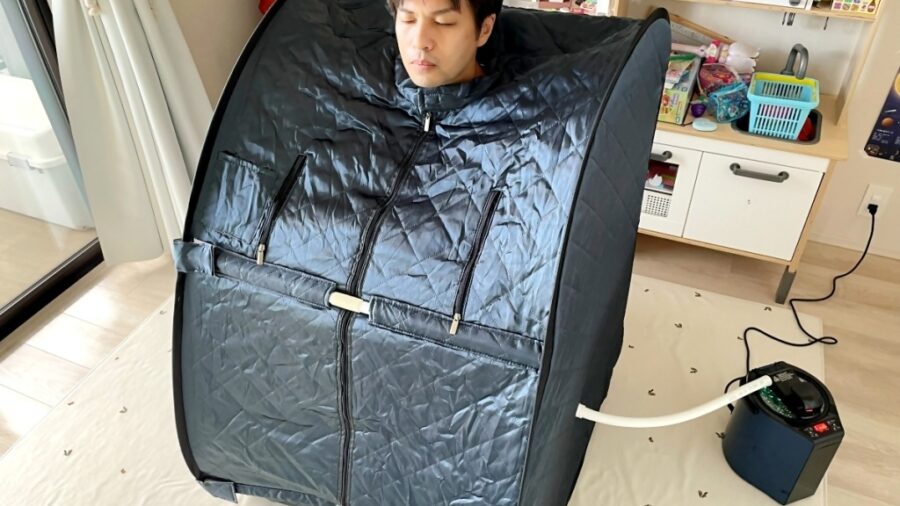
A Japanese reporter purchased an assemble-it-yourself steam sauna kit from an online retailer to determine if a low-cost home solution could replace traditional spa visits. Ahiruneko, who previously visited saunas weekly, sought an alternative after his lifestyle shifted due to family commitments and a long commute.
Assembly and Setup
The kit, purchased on Rakuten for 17,780 yen (approximately $112 USD), arrived in a single cardboard box. Components included a floor mat, piping for a tent frame, a steam generator, a steam dispersal device, a hose, and a folding chair. The reporter noted that the provided instructions were written in non-fluent Japanese, though he successfully assembled the structure by referencing photos on the product page.
The sauna tent features a design resembling a padded vest, with a neck opening and slits for hand access. An exterior pocket houses a remote control for managing the steam generator, which functions similarly to a rice cooker. The steam is channeled through a tube into a dispersion box placed inside the tent.
Performance and Observations
Once assembled, the tent occupies a small footprint in the living room, with enough interior space to accommodate the folding chair. The reporter observed that the floor mat effectively prevents moisture damage to the home floor.
Upon activation, the steam generator display proved difficult to read, appearing blurry and indistinct. Despite the unclear display, the reporter managed to operate the unit using the control buttons. The device successfully produced steam, filling the tent enclosure.
Why it matters: As remote work and home-based wellness trends persist globally, consumers are increasingly seeking affordable, space-saving alternatives to traditional health facilities. This test highlights the trade-offs between cost and quality in the growing market for home-use wellness gadgets.
 Egypt
 Saudi Arabia
 UAE
 Spain
 United Kingdom
 United States
 China
 India
