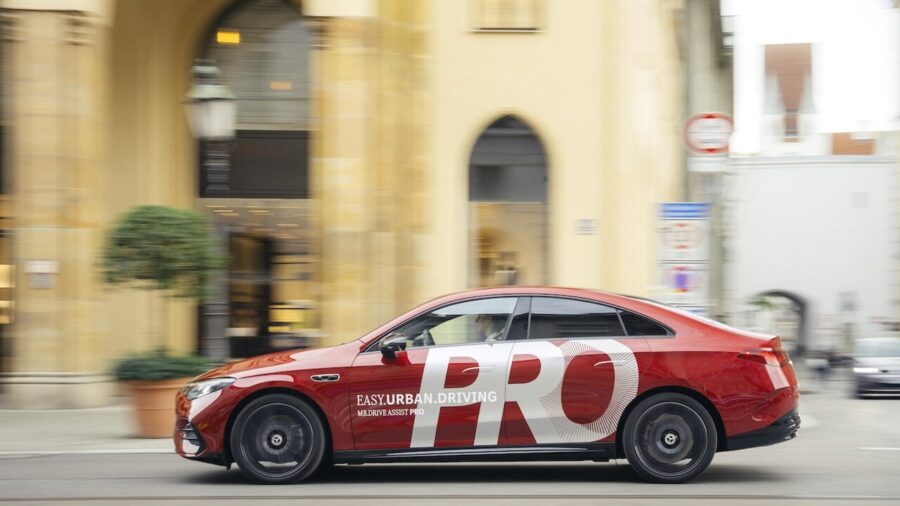
Expanding Automated Systems
Mercedes-Benz is preparing to deploy its advanced, partially autonomous driving technology in urban environments. The automaker announced plans to introduce the system in Germany, China, and the United States beginning in the first half of 2027.
The expansion marks a shift for the company, which has previously focused its automated driving capabilities on highway conditions. This new iteration of the technology is designed to navigate the complexities of city traffic, a significant technical hurdle for vehicle automation.
Global Rollout Strategy
The company confirmed the deployment schedule during a recent industry update. While specific city locations remain undisclosed, the target markets represent the core regions for the manufacturer’s current autonomous testing programs.
This technology, classified as Level 3, allows the vehicle to handle driving tasks under specific conditions while the driver remains available to take control if necessary. The transition from controlled highway environments to public urban streets requires extensive regulatory approval and infrastructure compatibility in each of the three target nations.
Industry analysts note that bringing these systems into city centers is a critical step toward broader vehicle autonomy. Competitors in the luxury automotive sector are also accelerating development timelines for similar urban driving features.
Why it matters: As major automakers race to integrate automated systems, this development signals a shift toward mainstream city use. For international markets, including those in the Middle East, such advancements often set the technological benchmarks that eventually influence global safety standards and local transport regulations.
 Egypt
 Saudi Arabia
 UAE
 Spain
 United Kingdom
 United States
 China
 India
