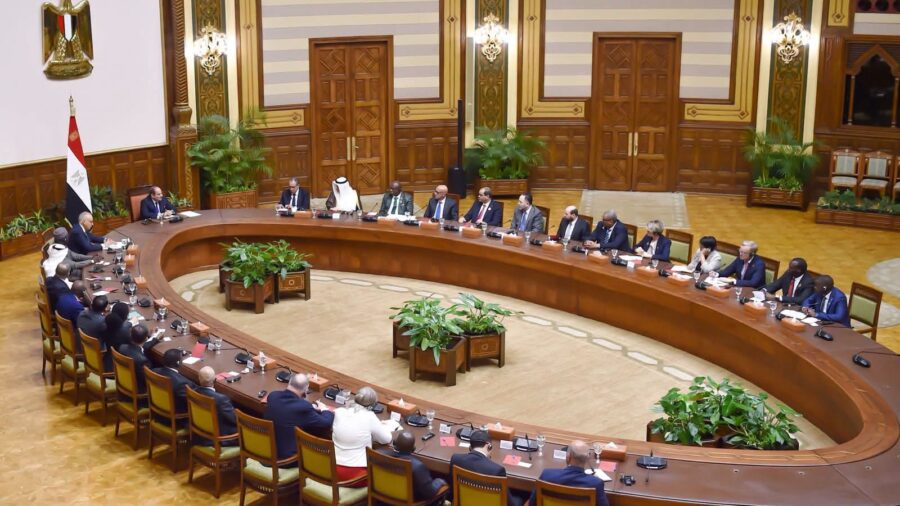
Egyptian President Abdel Fattah Al-Sisi warned on Monday that Nile River water rights must not be used for political leverage. Speaking at the 9th Cairo Water Week, Al-Sisi emphasized that international cooperation and transparency remain essential to regional stability in the Eastern Nile Basin.
Key Takeaways
- Water rights: Al-Sisi stated that Nile water is an exclusive right for all and should not be exploited for political purposes.
- Cooperative framework: The president advocated for prior notification and data exchange to build trust among Egypt, Sudan, and Ethiopia.
- Population pressure: Egypt relies on the Nile for 98% of its renewable water, serving a population of 120 million people.
- Water scarcity: With annual rainfall averaging just 18 millimeters, Egypt currently recycles approximately 23 billion cubic meters of water.
- Diplomatic initiatives: Egypt is currently leading several regional water councils, including the African Ministers’ Council on Water.
Regional Water Management
Addressing ministers and officials at the Al-Ittihadiya Palace, Al-Sisi noted that the Nile Basin receives roughly 2,050 billion cubic meters of rain annually, though only 4% to 5% reaches Aswan. He proposed an inclusive framework to engage the four basin nations currently operating outside existing agreements, suggesting amendments or protocols to address collective concerns.
Minister of Water Resources and Irrigation Hani Sewilam echoed these sentiments, stating that climate change necessitates proactive water systems. He argued that international river management must adhere to international law and prioritize transparency to benefit all riparian states.
Domestic Water Strategy
Egypt faces significant water deficits, with the annual per capita water share falling to roughly 473 cubic meters. To mitigate these shortages, the government has implemented a second-generation water system. This strategy prioritizes digital transformation, smart management, and climate adaptation technologies.
 Egypt
 Saudi Arabia
 UAE
 Spain
 United Kingdom
 United States
 China
 India
