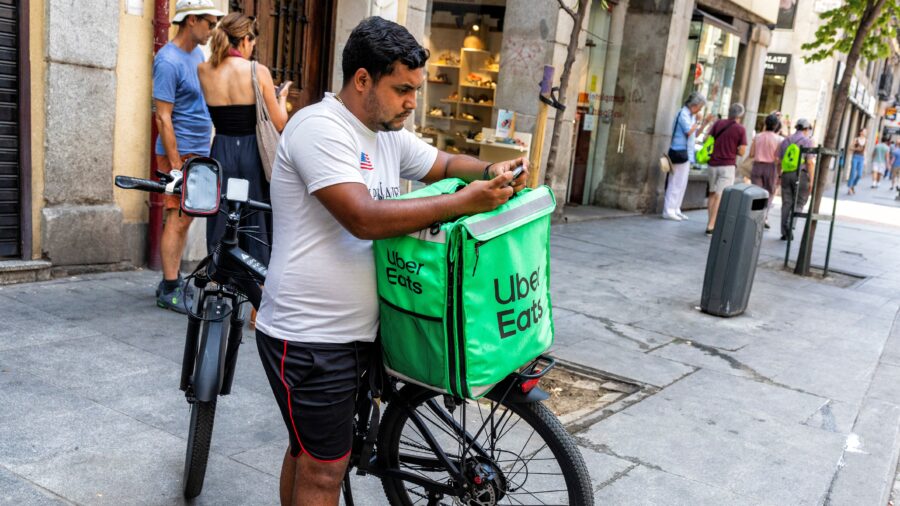
Uber Eats will stop using independent contractors for its food delivery operations in Spain starting December 1. The company reached an agreement with the labor unions CC OO and UGT to transition its remaining workforce of approximately 4,000 independent delivery riders into employment contracts.
Key Takeaways
- Operational shift: Uber Eats will discontinue its independent contractor model effective December 1, finalizing the transition to a fully employed workforce in Spain.
- Workforce transition: Approximately 4,000 riders currently classified as self-employed will be hired by a newly created entity subcontracted by Uber Eats.
- Union involvement: The agreement was negotiated and formalized with major labor unions CC OO and UGT.
- Regulatory pressure: The move follows investigations by the Labor Ministry, which previously required the company to pay 110 million euros in unpaid social security contributions.
- Industry alignment: Uber Eats is the final major food delivery platform in Spain to move away from the self-employed model, following a similar change made by competitor Glovo last year.
Transition to Employment
The decision to shift employment models follows months of legal and regulatory pressure regarding the “rider law” in Spain. In January, Uber Eats announced plans to modify its business structure to comply with labor regulations. The company faced scrutiny from the Ministry of Labor, which threatened criminal proceedings against executives regarding the classification of workers.
Investigations by labor inspectors determined that the company owed 110 million euros in unpaid social security contributions for riders who were classified as independent contractors despite the legal requirements for employment. By creating a new subcontracted entity to hire these workers, Uber Eats aims to align its Spanish operations with national labor standards.
 Egypt
 Saudi Arabia
 UAE
 Spain
 United Kingdom
 United States
 China
 India
