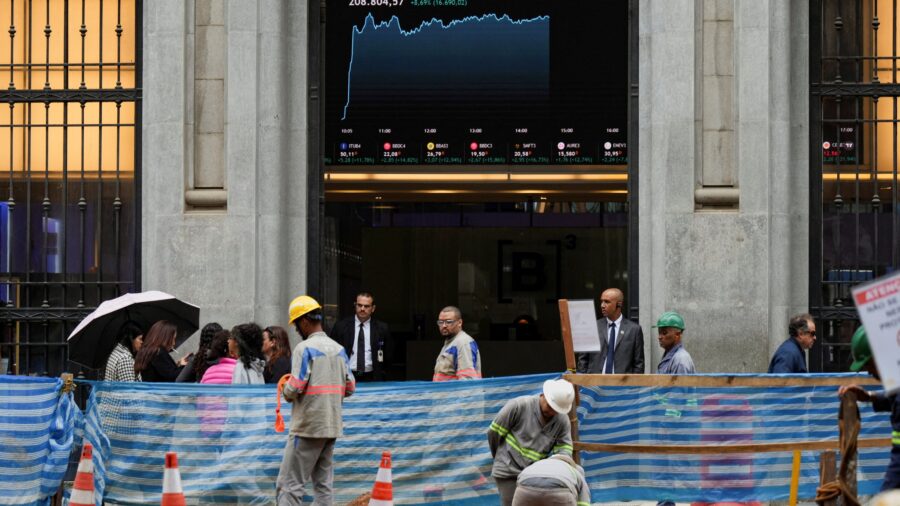
Brazilian financial markets are showing signs of stabilization following a period of volatility triggered by the re-election of President Luiz Inácio Lula da Silva. Investors are currently monitoring the incoming administration’s fiscal policy and key economic appointments.
Monday
The Brazilian stock market experienced significant losses following the election results. The benchmark Bovespa index fell by 13.4 percent. Market data indicated that investors had anticipated a victory for Senator Flávio Bolsonaro, who was viewed as more business-friendly. The total value of the Brazilian market decreased by more than 180 billion euros. The local currency, the real, and government debt valuations also declined sharply.
Tuesday
Financial indicators showed a reversal of the previous day’s trend. Both the Brazilian real and the Bovespa index recorded modest gains. Analysts report that investors are now adopting a cautious stance, focusing on the new government’s specific fiscal strategies and the selection of economic leadership.
Current Market Outlook
The initial market reaction to the election outcome has softened. While the immediate aftermath saw substantial capital outflows, current trading reflects a period of assessment. Market participants await further clarity on economic policy appointments to gauge the direction of the new administration.
Why it matters: The stability of Brazil’s economy is a significant indicator for emerging markets globally. Investors closely watch fiscal appointments in major developing economies to assess long-term policy direction and sovereign risk, which can influence international capital flows.
 Egypt
 Saudi Arabia
 UAE
 Spain
 United Kingdom
 United States
 China
 India
