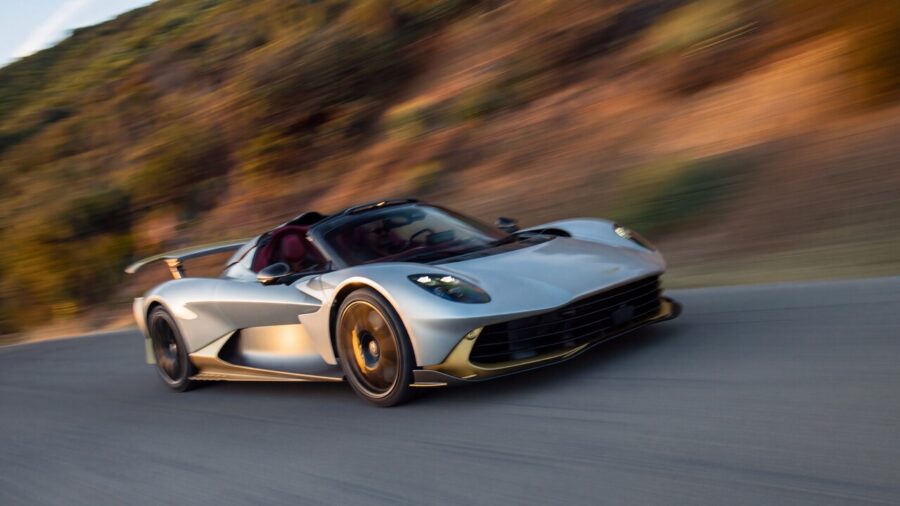
Aston Martin has announced the upcoming release of the Valhalla Spider, a plug-in hybrid supercar scheduled to reach the market in the third quarter of 2027. The vehicle combines a twin-turbocharged V8 engine with a trio of electric motors to generate 1,079 horsepower.
Key Takeaways
- Planned release date: The Valhalla Spider is slated for delivery starting in the third quarter of 2027.
- Hybrid powertrain: The vehicle utilizes a plug-in hybrid system featuring a twin-turbocharged V8 internal combustion engine.
- Electric integration: Three electric motors support the internal combustion engine to maximize performance.
- Total power output: The combined powertrain configuration delivers a total of 1,079 horsepower.
Technical Specifications and Timeline
The Valhalla Spider represents the latest addition to Aston Martin’s high-performance vehicle lineup. By integrating a twin-turbo V8 with three distinct electric motors, the manufacturer aims to achieve a total output of 1,079 horsepower. This hybrid architecture marks a shift toward electrification for the brand’s supercar segment.
The company confirmed that production and delivery schedules are targeted for the third quarter of 2027. While specific performance metrics regarding torque and acceleration remain forthcoming, the power figure positions the model among the most potent vehicles in the manufacturer’s history.
Strategic Market Positioning
The introduction of the Valhalla Spider aligns with broader industry trends toward hybrid supercar development. By combining traditional combustion technology with electric propulsion, manufacturers are attempting to balance performance requirements with evolving emissions standards.
Why it matters: This development reflects the ongoing transition of luxury automotive manufacturers toward hybrid technologies. For automotive enthusiasts and collectors in the Middle East, where high-performance vehicles maintain a significant market presence, the arrival of the Valhalla Spider signals the continued availability of high-output internal combustion engines supported by electric power.
 Egypt
 Saudi Arabia
 UAE
 Spain
 United Kingdom
 United States
 China
 India
