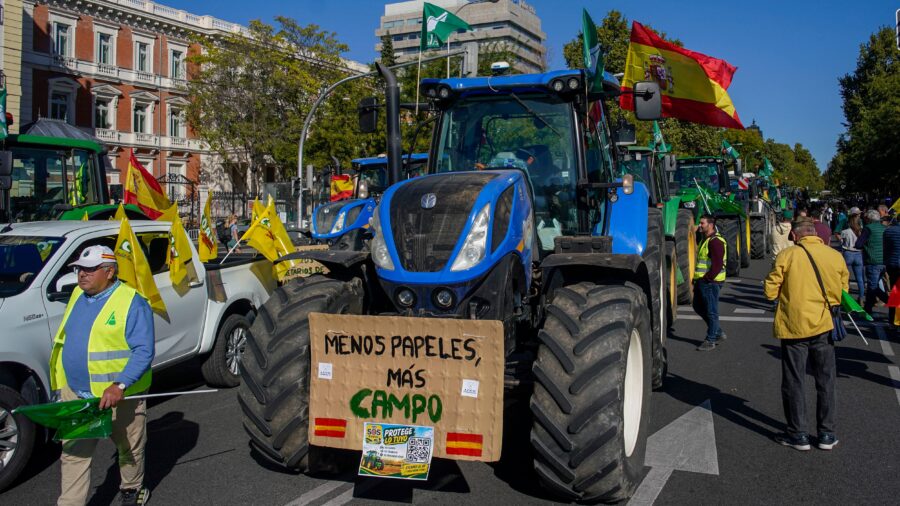
Farmers in Spain canceled a planned demonstration in Madrid on Wednesday following a fatal train accident in Toledo. While organizers called off the march, hundreds of farmers and approximately 500 tractors arrived in the capital to highlight their ongoing demands.
The demonstrators gathered at Plaza de Colón to hear brief remarks from protest leaders. Following the speeches, the group decided against marching to their intended destination, the Ministry of Agriculture near Atocha station. The protest was originally organized to pressure the government for a comprehensive economic plan to ensure the future profitability of the agricultural sector.
Protest Context
Despite the cancellation, the turnout was significant. Hundreds of agricultural workers had already begun their journey to Madrid before news of the rail accident emerged. The organizers used the gathering at Plaza de Colón to reiterate their primary grievances before dispersing.
The farmers were seeking government intervention to address financial instability within the industry. They argue that current market conditions threaten the viability of their operations. The proposed “shock plan” was intended to provide immediate support to stabilize the sector.
The Decision to Halt
The decision to suspend the march was made out of respect for the victims of the rail crash in Toledo. Organizers stated that proceeding with the protest would not be appropriate given the circumstances. Although the event did not reach the Ministry of Agriculture as planned, the farmers successfully brought their machinery and presence to the city center, ensuring their message reached the public domain.
Why it matters: This event highlights the volatility of agricultural policy in Spain and the ability of the farming sector to mobilize quickly. It demonstrates how national tragedies can abruptly shift the political discourse and disrupt planned protests aimed at economic reform.
 Egypt
 Saudi Arabia
 UAE
 Spain
 United Kingdom
 United States
 China
 India
