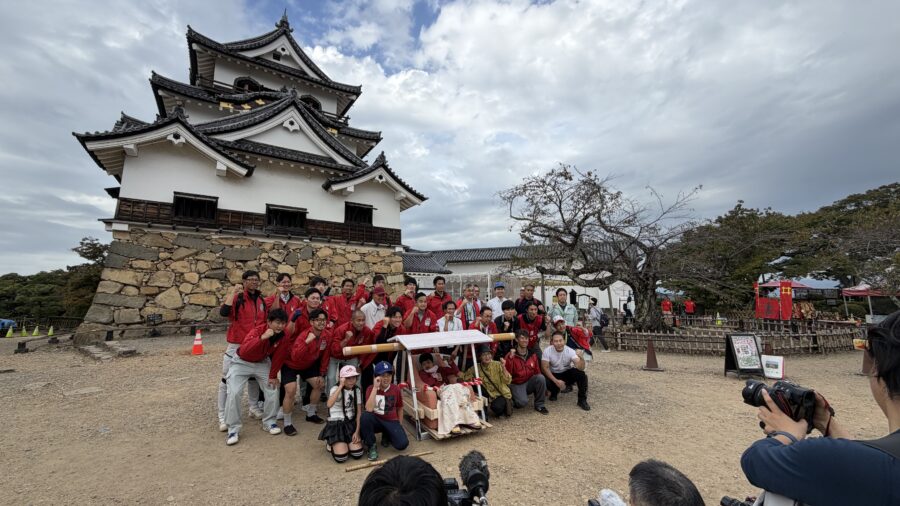
Hikone Castle in Japan is known for its original 17th-century main keep, but its 140 steep, irregular stone steps present a significant barrier for visitors with mobility impairments. City officials are now testing a combination of traditional palanquins and modern wearable technology to bridge this gap, as the site eyes UNESCO World Cultural Heritage status by 2028.
A Traditional Approach with Modern Support
On October 19, city staff and volunteers conducted a trial to transport wheelchair users to the castle’s main enclosure. The route spanned a 285-meter round trip with a 50-meter vertical rise and an average incline of 18 percent. To manage the physical strain of carrying passengers in a wooden mountain palanquin, the team of six carriers utilized non-motorized, wearable assist suits.
Participants wore the Muscle Suit Soft-Power Easy-Lift and the Mediaid Firm Guard Waist EX Hard. Carriers reported that the equipment provided stability, particularly when balancing the weight of the palanquin on their shoulders. One participant noted that the suit provided back-and-leg support that made rising smoother and more stable, while another remarked on the sense of security the gear provided for those with previous back injuries.
Expanding Tourism Potential
The trial served as more than a logistical test. Curators accompanied the group, providing historical context and descriptions of the scenery to offer visitors an experience reminiscent of travel during the samurai era. City officials suggested that if the technology proves successful, it could facilitate broader access to other historic castles and mountain temples that currently lack infrastructure for wheelchairs.
This initiative reflects a growing trend in Japanese tourism to integrate human-powered transport, such as rickshaws, with modern assistive devices. By addressing the physical limitations of historic architecture, local authorities hope to make heritage sites inclusive while preserving the original structures.
 Egypt
 Saudi Arabia
 UAE
 Spain
 United Kingdom
 United States
 China
 India
