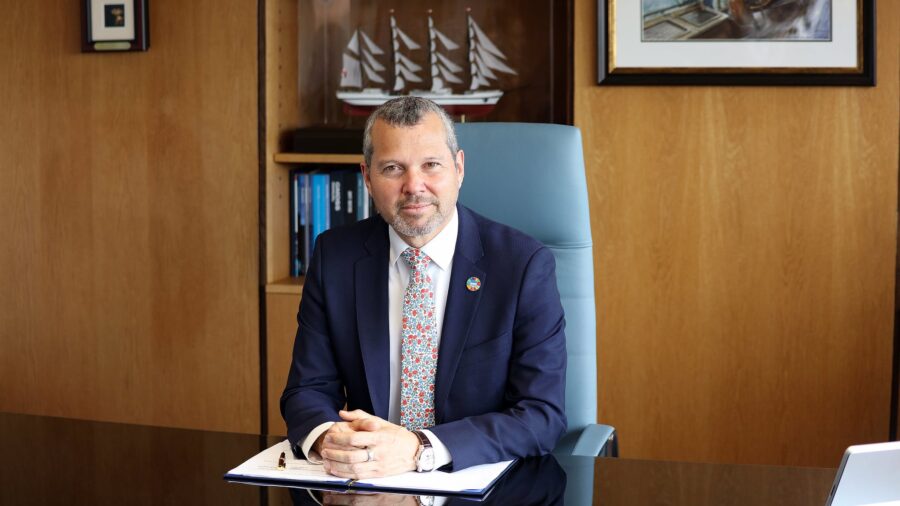
Arsenio Domínguez, secretary general of the International Maritime Organization (IMO), said navigation in the Strait of Hormuz is becoming increasingly hazardous due to a lack of security.
Key takeaways
- Safety concerns rise: Domínguez warned that the ongoing crisis endangers thousands of seafarers trapped in the Persian Gulf.
- Deadly attacks recorded: Several crew members have been killed in recent vessel assaults in the area.
- IMO priority is crew protection: The organization stresses that safeguarding crews is its main focus.
- UN route deemed essential: The IMO urges a return to the United Nations‑recognized navigation lane as the only reliable solution.
- Alternative paths deemed unsustainable: Routes controlled by Iran or the U.S. Navy along Oman’s coast are considered unreliable for the long term.
Escalating risks for mariners
In a telephone interview from the IMO headquarters in London, Domínguez highlighted the plight of thousands of sailors who remain stuck in the Gulf of Persia since the conflict began. He noted that attacks on ships have resulted in fatalities among crew members, underscoring the urgent need for protective measures.
IMO’s core mission
The Panamanian naval architect emphasized that the IMO’s top priority is the safety of maritime personnel. He said the organization has consistently called for the restoration of normal traffic through the strait, which is the route endorsed by the United Nations.
Limitations of alternative routes
Domínguez argued that detours either under Iranian control or managed by the U.S. Navy along Oman’s coastline lack the reliability and sustainability required for future shipping. He warned that reliance on such alternatives could compromise long‑term maritime commerce.
Why it matters:
The safety of shipping lanes in the Strait of Hormuz affects global oil supplies and trade routes that are vital to economies across the Middle East, including Egypt, which depends on stable maritime transport for energy imports.
 Egypt
 Saudi Arabia
 UAE
 Spain
 United Kingdom
 United States
 China
 India
