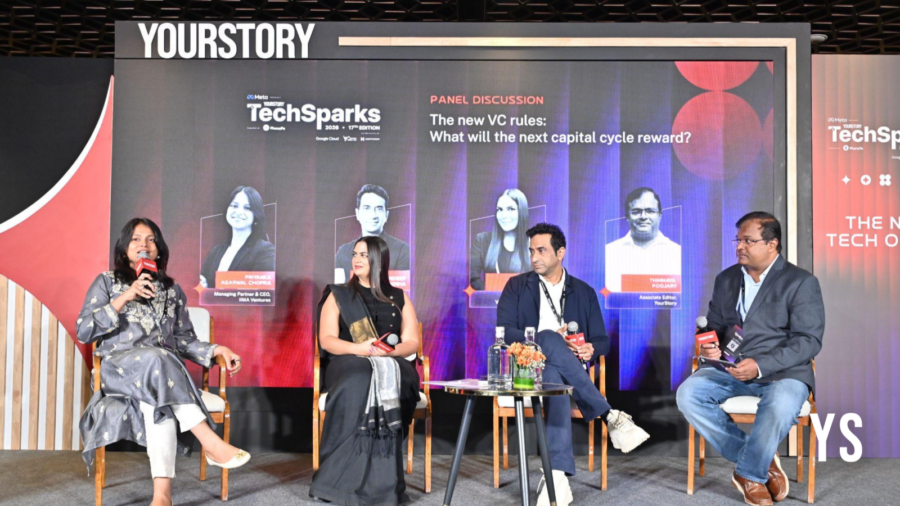
Deeptech startups in India are securing increased venture capital funding as investors shift focus toward technological sovereignty and domestic manufacturing. The trend marks a departure from previous years, when early-stage capital for high-risk ventures was scarce.
A Changing Investment Landscape
Industry leaders discussed the shift during a panel at TechSparks 2026. Priyanka Agarwal Chopra, CEO of IIMA Ventures, noted that deeptech was once considered too risky for conventional venture capital due to long development timelines. She said her firm began investing in these sectors specifically to fill gaps where private capital was absent. Today, however, more funds are willing to support ventures at the pre-seed stage.
The current investment environment is driven by two primary themes: technological sovereignty and import substitution. According to Chopra, these priorities are encouraging startups to address domestic requirements while simultaneously developing products for global markets.
Infrastructure and Future Growth
Investment strategies are also expanding to include the foundational layers of technology. Anaina Malik, a partner at VU Venture Partners, said that artificial intelligence infrastructure requires as much attention as application-led innovation. She identified agriculture and advanced manufacturing as sectors with significant potential for disruption.
Malik observed that the distinction between domestic and international markets is fading. She added that global capital is showing increasing interest in Indian innovation.
Sandeep Sinha, co-founder of Oister Global, attributed this growth to the maturation of the ecosystem. He noted that many companies that began operations nearly a decade ago are now achieving commercial readiness.
Why it matters: This shift indicates that India is moving from a consumer of technology to a producer. For investors in emerging markets like the Middle East and Egypt, the Indian model demonstrates how focusing on import substitution and indigenous infrastructure can attract global capital and stabilize local tech ecosystems.