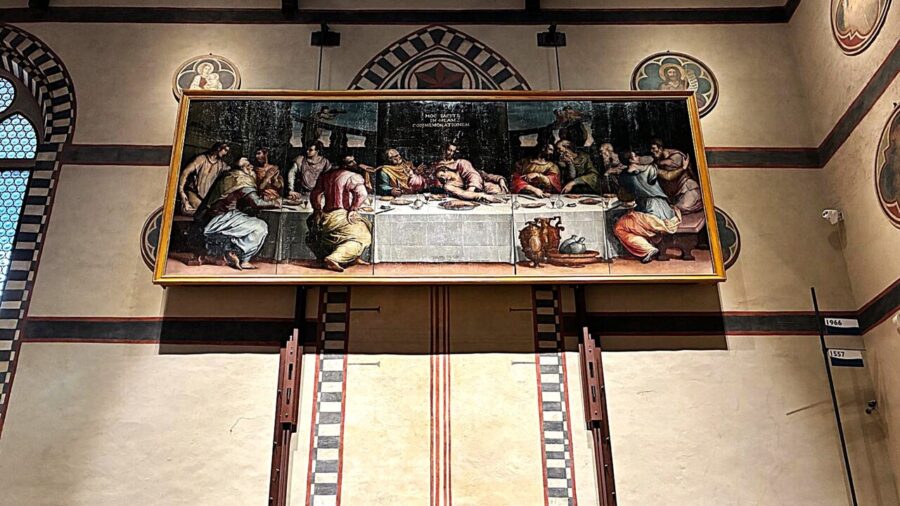
Restoration experts in Florence have successfully tested a new emergency mechanism designed to protect Giorgio Vasari’s 16th-century masterpiece, The Last Supper, from potential flood damage. The system, developed to prevent a repeat of the catastrophic 1966 Arno River floods, allows the massive painting to be hoisted to safety in seconds.
A Rapid Response Mechanism
The painting, housed at the Opera di Santa Croce, is now equipped with a motorized lift capable of raising the artwork in 11 seconds. During the recent test, technicians verified the mechanical integrity of the hoist, ensuring the fragile panel can be moved quickly out of harm’s way if water levels rise dangerously high. The device is intended to function as a final line of defense for the historic work, which was severely damaged in the 1966 flood and required years of restoration.
Preserving Historic Art
The Last Supper was painted by Vasari between 1545 and 1548. It remains one of the most significant pieces in the Santa Croce collection. The implementation of this technology highlights the ongoing efforts by Italian cultural authorities to modernize preservation techniques for heritage sites vulnerable to climate-related risks. Officials noted that the ability to secure the painting rapidly reduces the reliance on manual evacuation, which can be difficult during emergency situations.
Future efforts will focus on integrating this lifting technology with broader flood-prevention monitoring systems across Florence’s museum network. This proactive approach aims to safeguard other vulnerable artifacts against environmental threats.
Why it matters: This development demonstrates practical engineering solutions for protecting cultural heritage sites from climate-related disasters. For regions with significant historical assets, such as Egypt, this case study underscores the necessity of combining modern technology with traditional conservation to mitigate risks from environmental events.