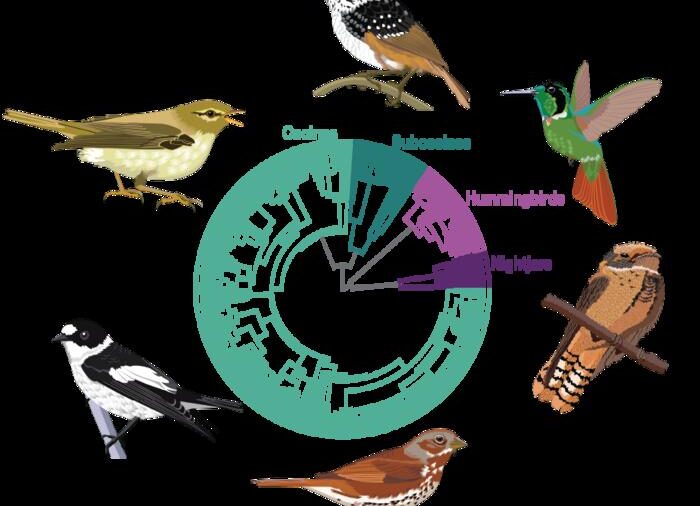
A study published in the journal Science on October 29 indicates that bird vocalizations share structural similarities with human speech and music, regardless of whether the birds learn their songs from others. Researchers analyzed over 74,500 sound units from nearly 6,000 songs across 367 bird species to determine if these commonalities stem from biological processes rather than vocal learning.
Broad Similarities Across Species
The research team, which included scientists from McGill University, compared bird recordings with a dataset of human speech and singing representing over 800 phrases across 52 languages. Logan James, a postdoctoral researcher at McGill and co-author of the study, noted that previous research often focused only on species capable of vocal learning. This new study examined four specific characteristics: pitch changes, rhythmic regularity, sound duration, and loudness dynamics.
The analysis revealed that birds frequently exhibit patterns similar to human communication, such as moving between nearby pitches rather than making large jumps. Researchers also observed that birdsong often features regular rhythmic patterns and the lengthening of sounds toward the end of phrases, a trait common in human musical phrasing and speech.
Challenging Vocal Learning Assumptions
The findings suggest that these patterns exist across diverse bird groups, including those that do not learn their vocalizations. This result challenges the long-held assumption that vocal learning is the primary driver behind the similarities between birdsong and human communication. Instead, the data indicates that physical and neurological processes involved in sound production may play a more significant role than previously understood.
Why it matters: This research provides new insight into the evolution of communication. By demonstrating that complex sound patterns appear across species that do not rely on vocal learning, the study suggests that the fundamental building blocks of music and speech may be more deeply rooted in biological processes shared among various species, rather than being exclusive to learners.